I'm back - let's continue! There's a folder with mockups for the levels in the game, all very different from the final game. But wait, what is this? Whale Bay? That's not in the game...!
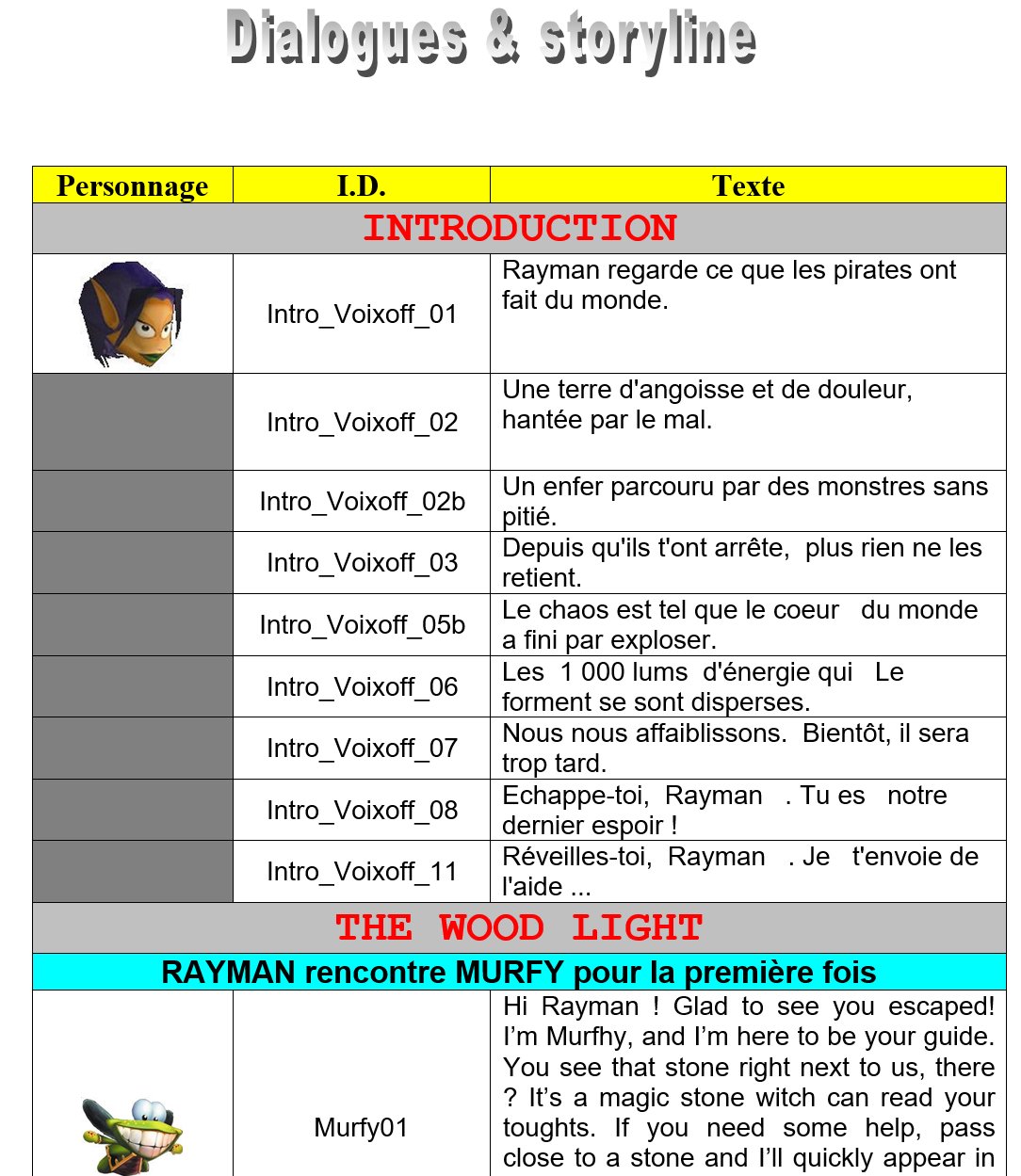
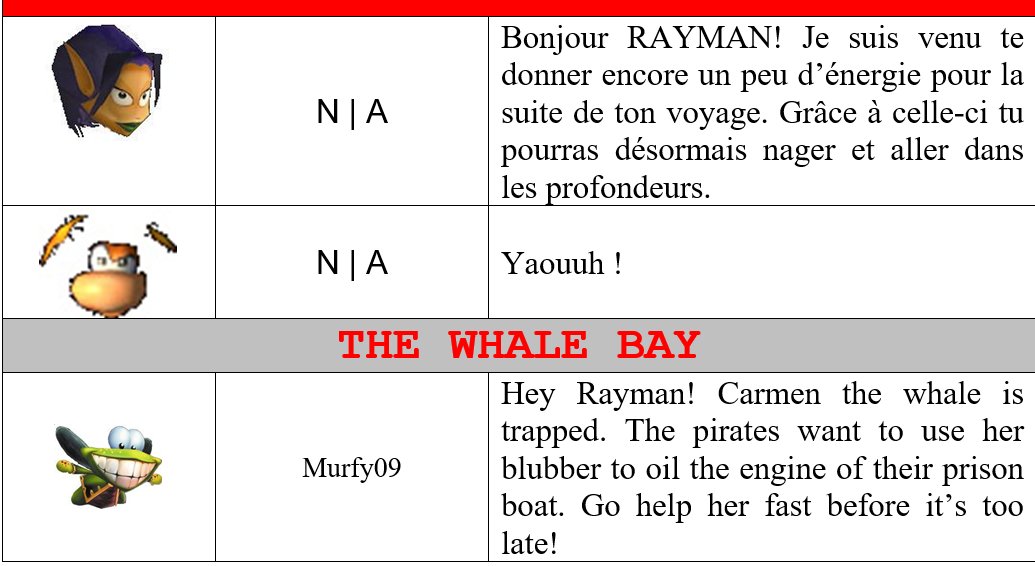
Here's a document detailing all the dialog in the game. Very different from the final game, instead being very close to Rayman 2.
But what more is we get Ly giving Rayman the power to swim after defeating Jano! This was to be used in Whale Bay.
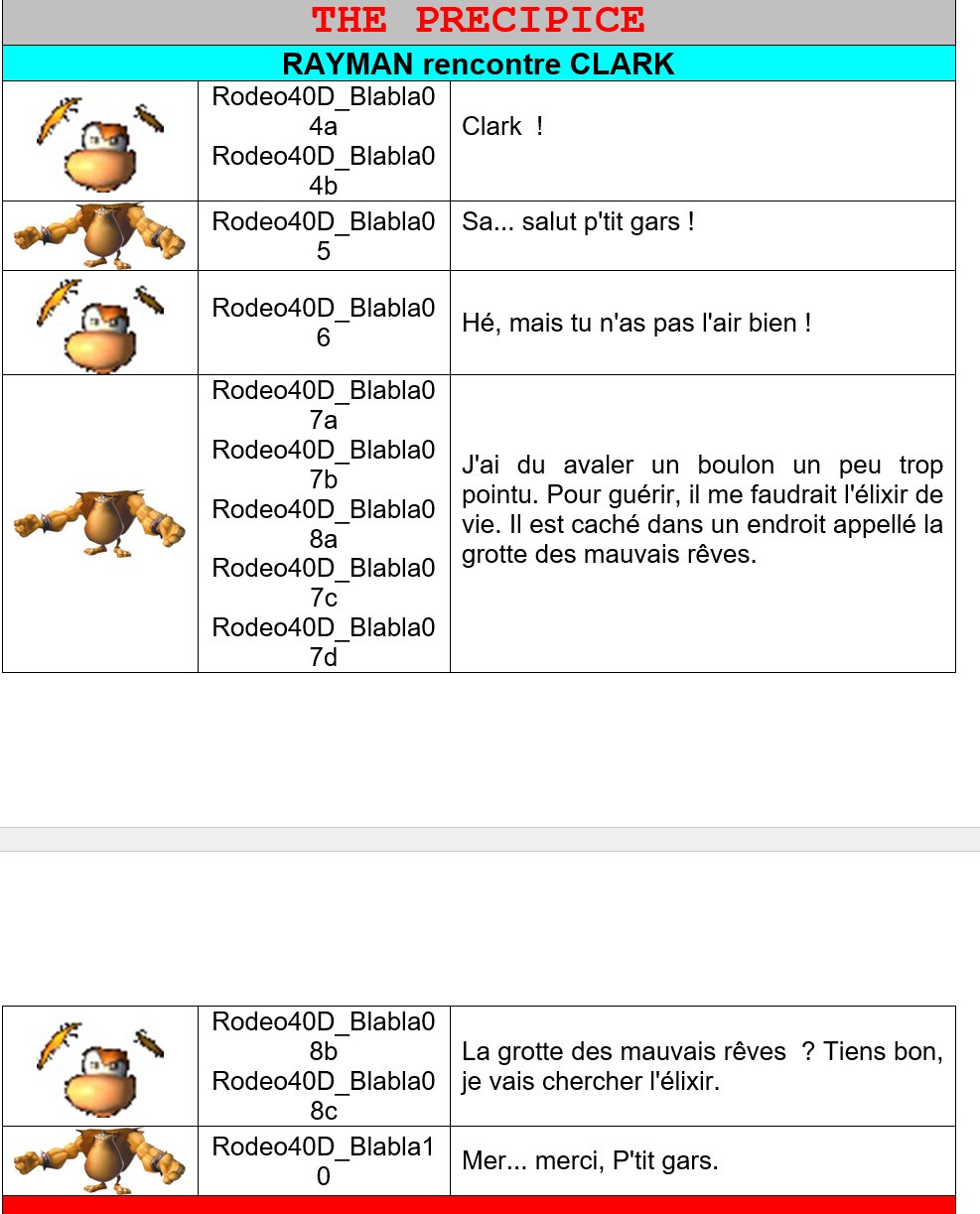
Apparently Rayman would run into Clark in The Precipice, from which you'd have to go to the Cave of Bad Dreams to get the elixir for him.

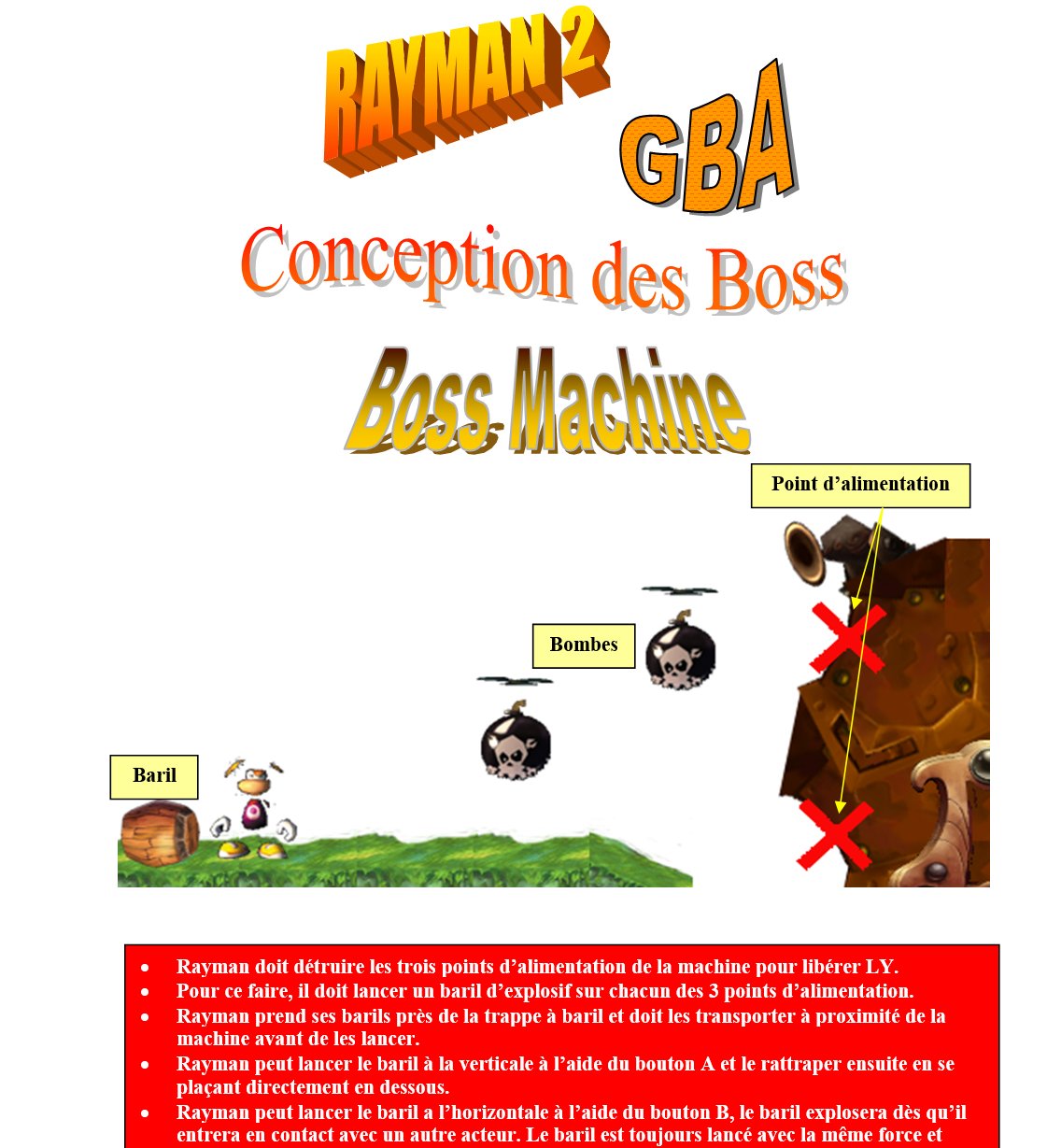
Here's another document with boss documentations. Some of these are a bit different, specifically the final fight like I mentioned before.
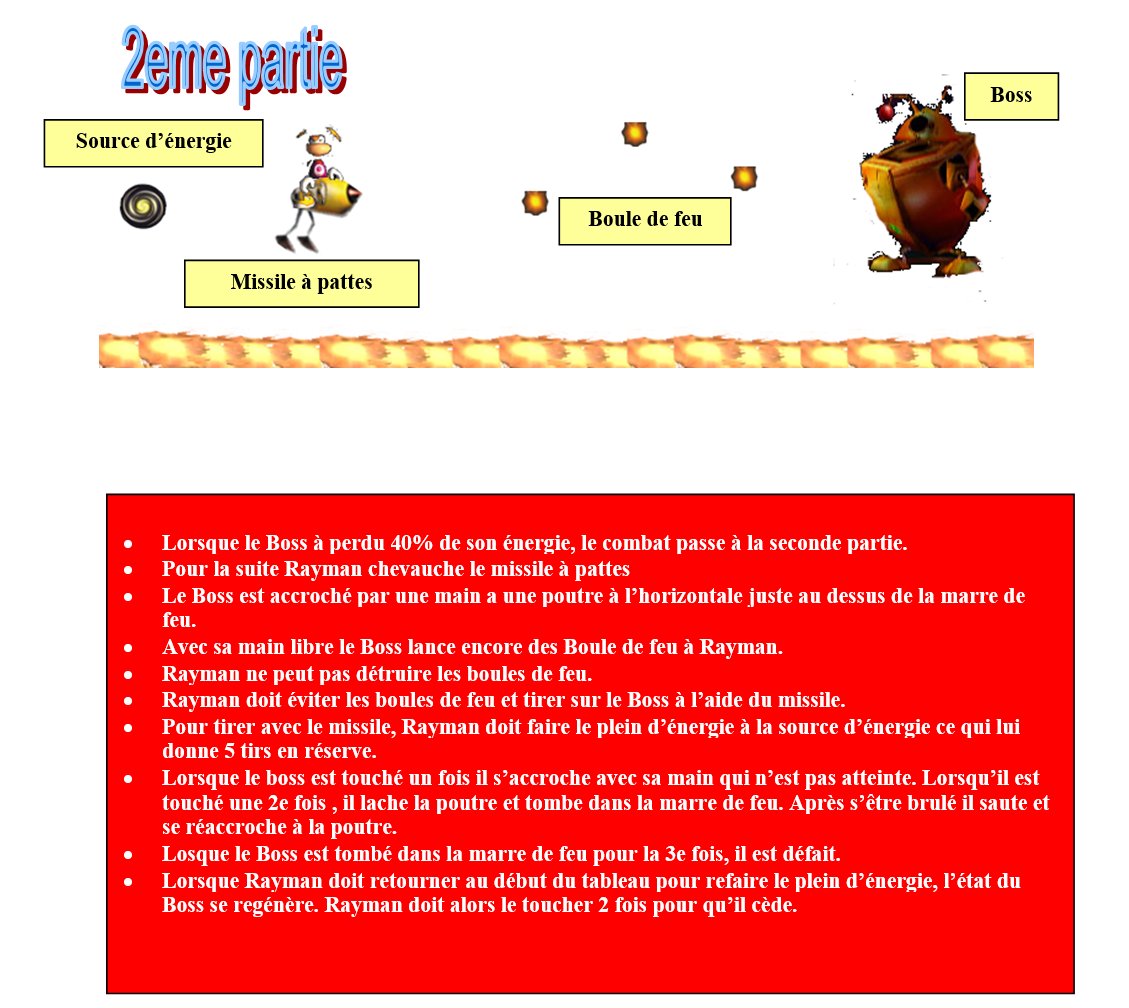
Here we can see how the swimming would have looked like in the game!

More game hub layouts, this time it appears to be an earlier version of it? Whale Bay is here now.
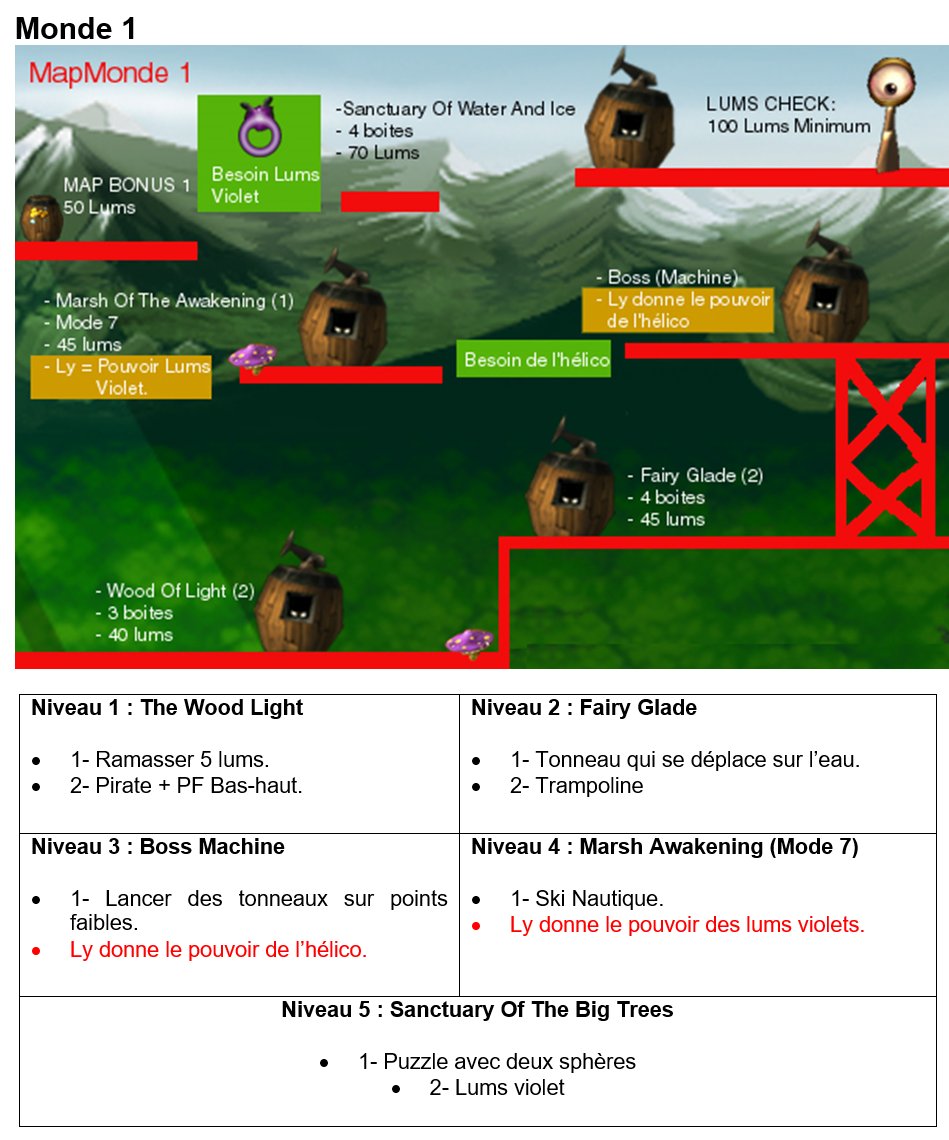
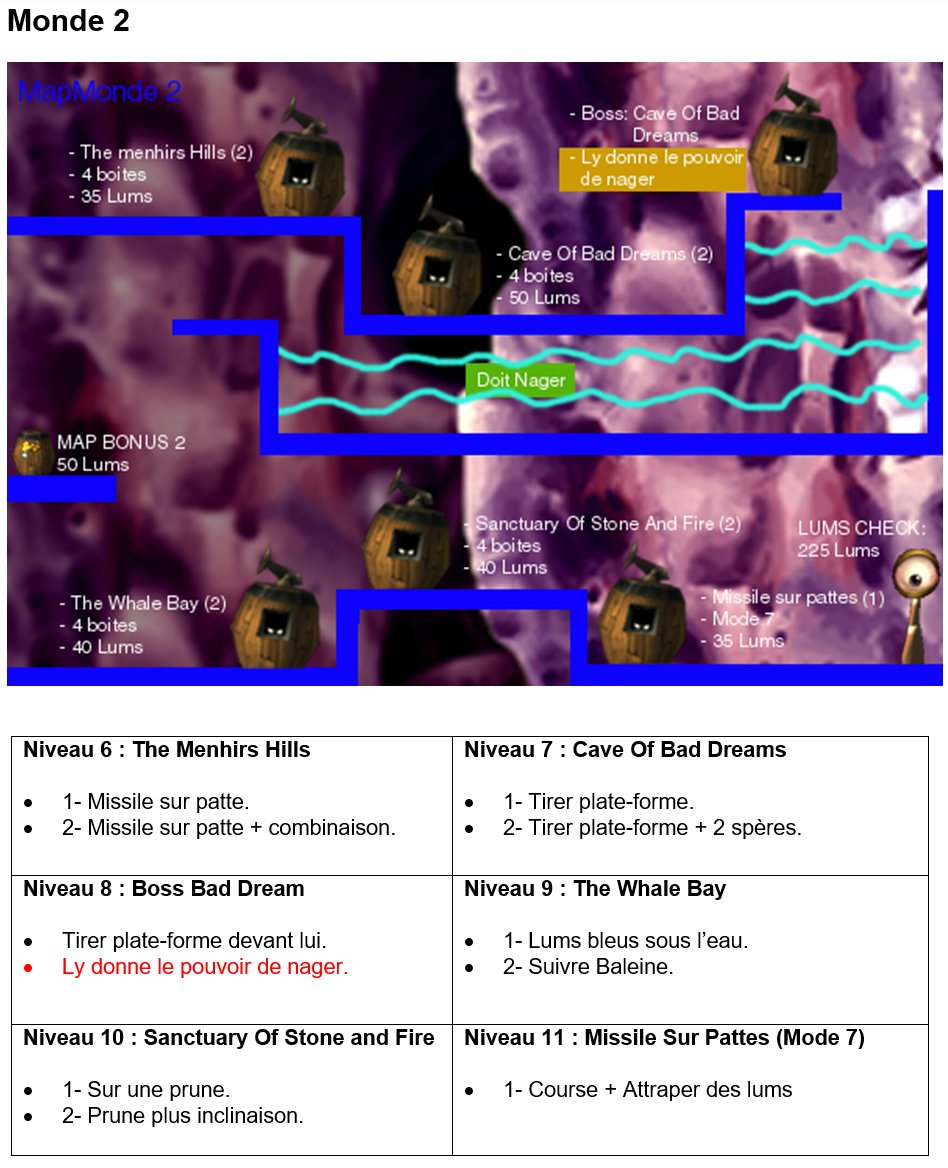
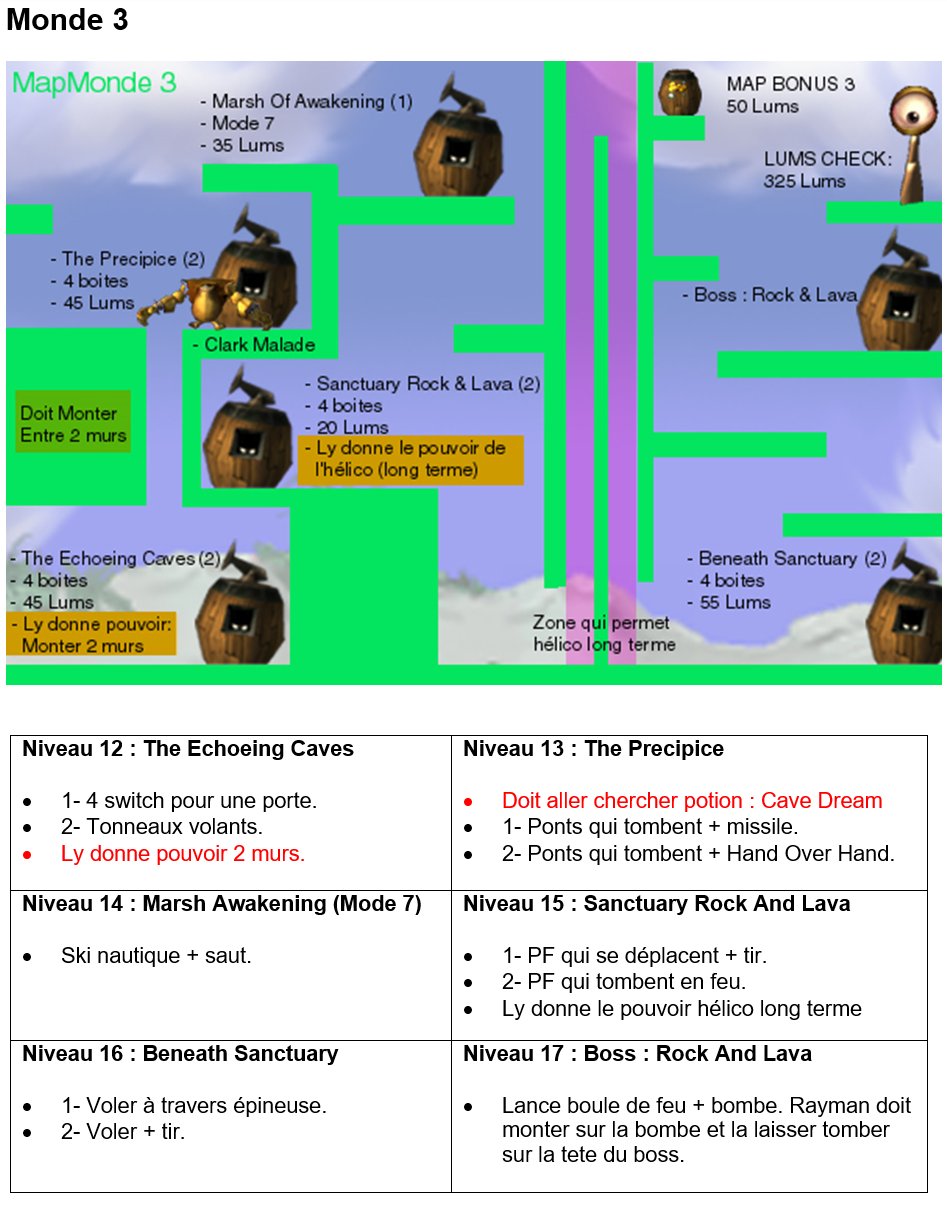
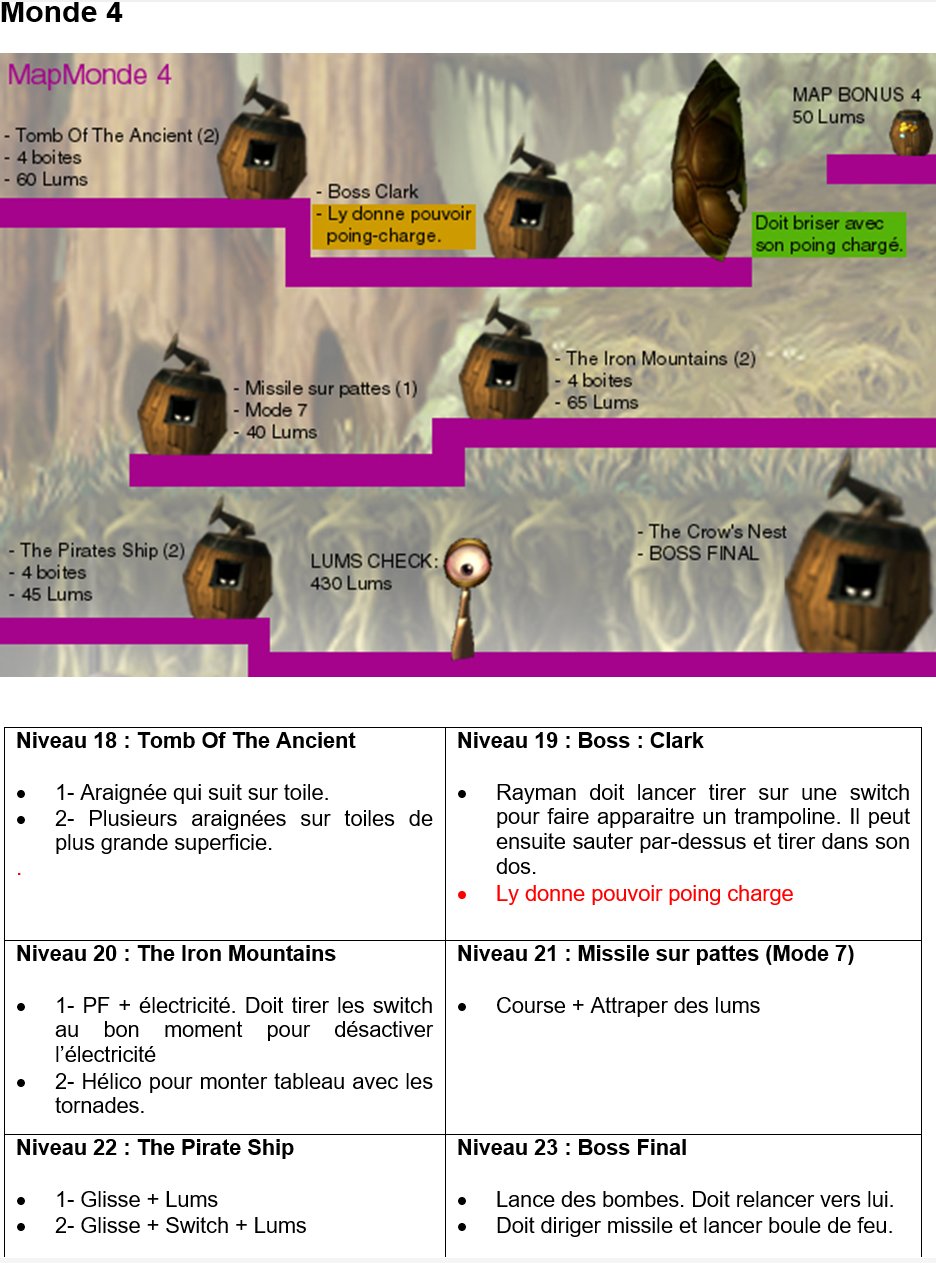
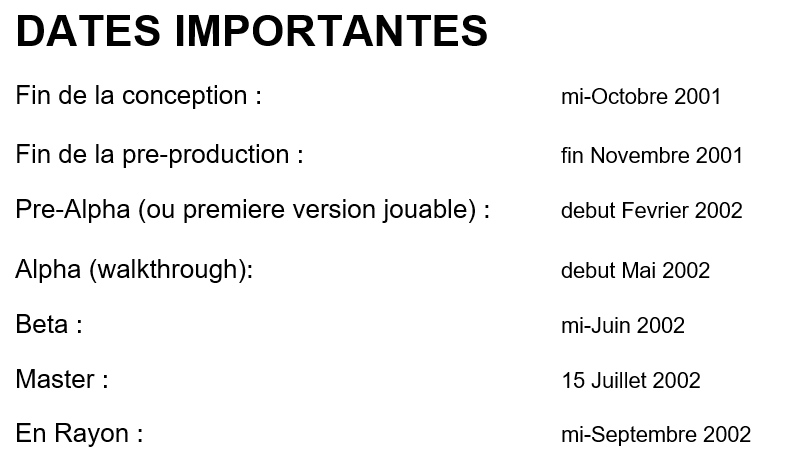
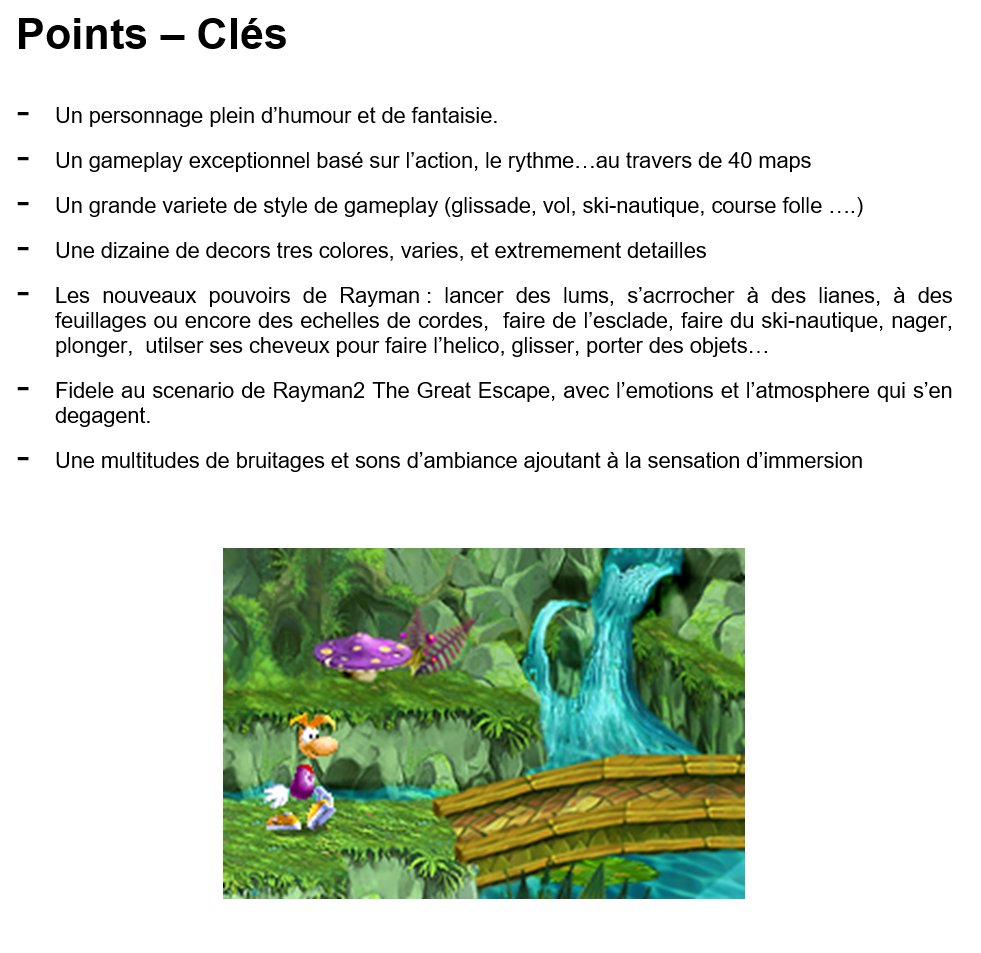
Here's a development timeline and some key points for the game
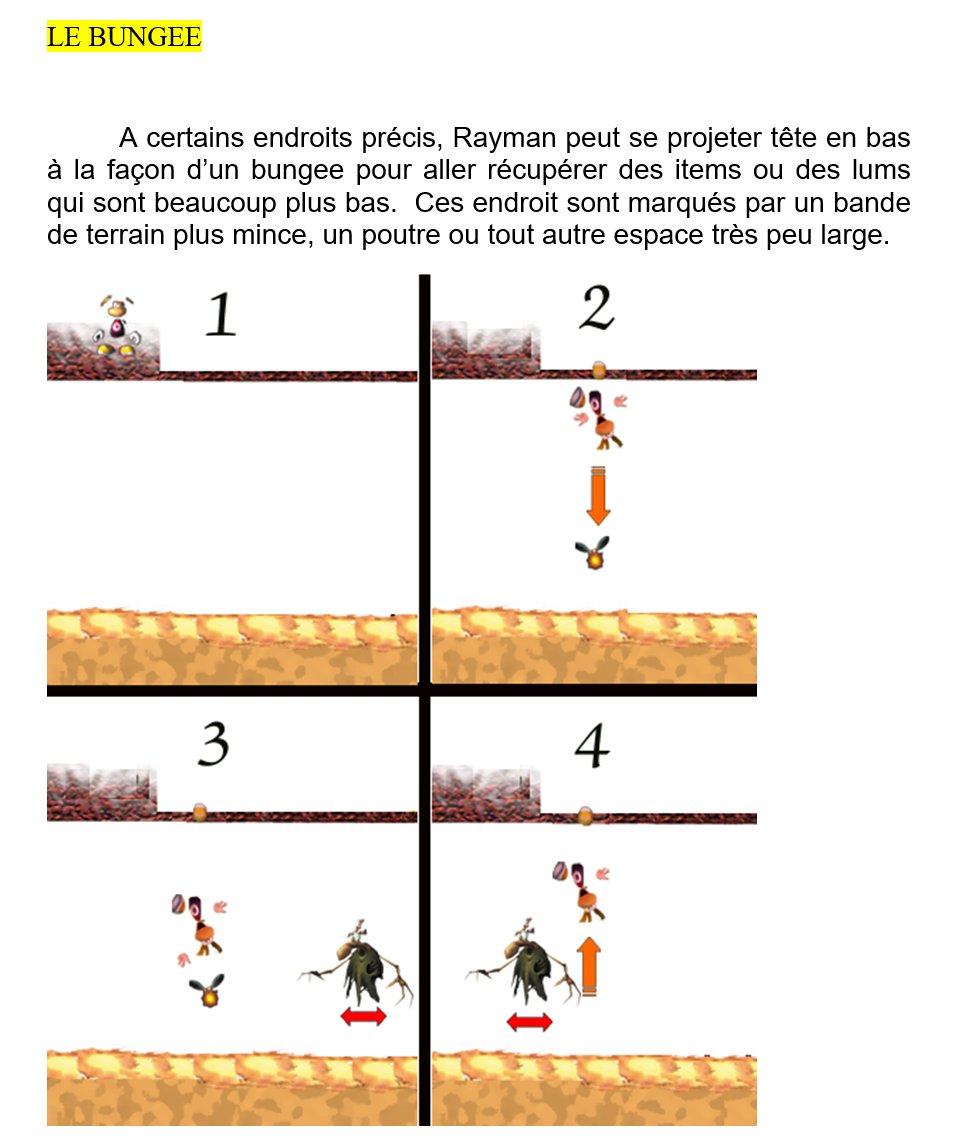
You would be able to move down and hang off of thin platforms. I already found some animations for this in the early roms!
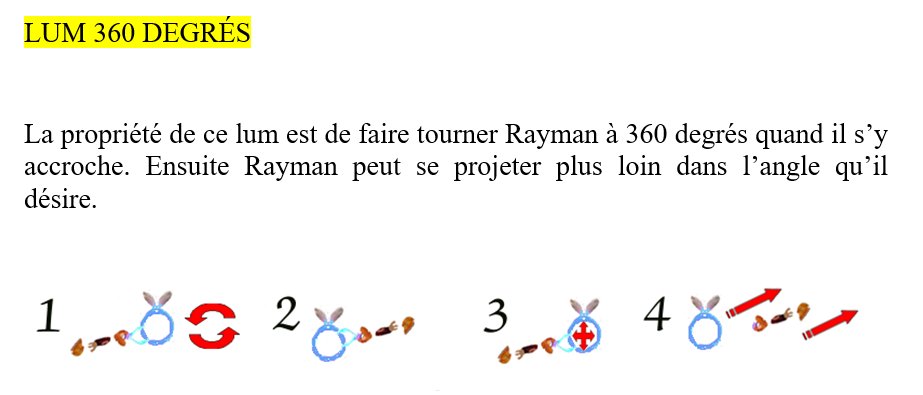
360 degree purple lum swings, exactly like in Rayman Redemption

Ryemanni yet again accidentally implements unused features!
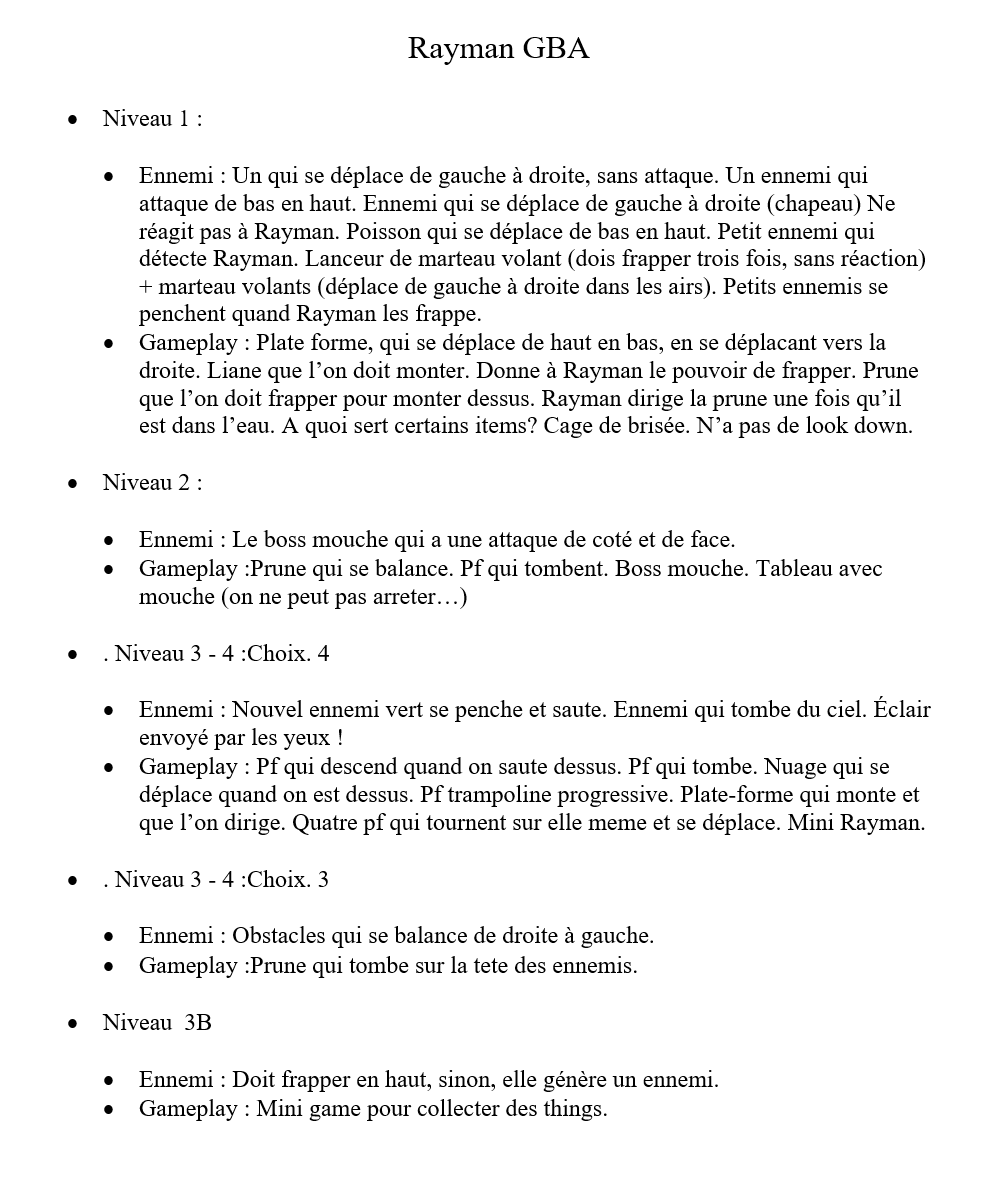
Here it details enemies from Rayman 1, most likely for inspiration.
Time for another break. I'll be back later with more! Still a lot left!

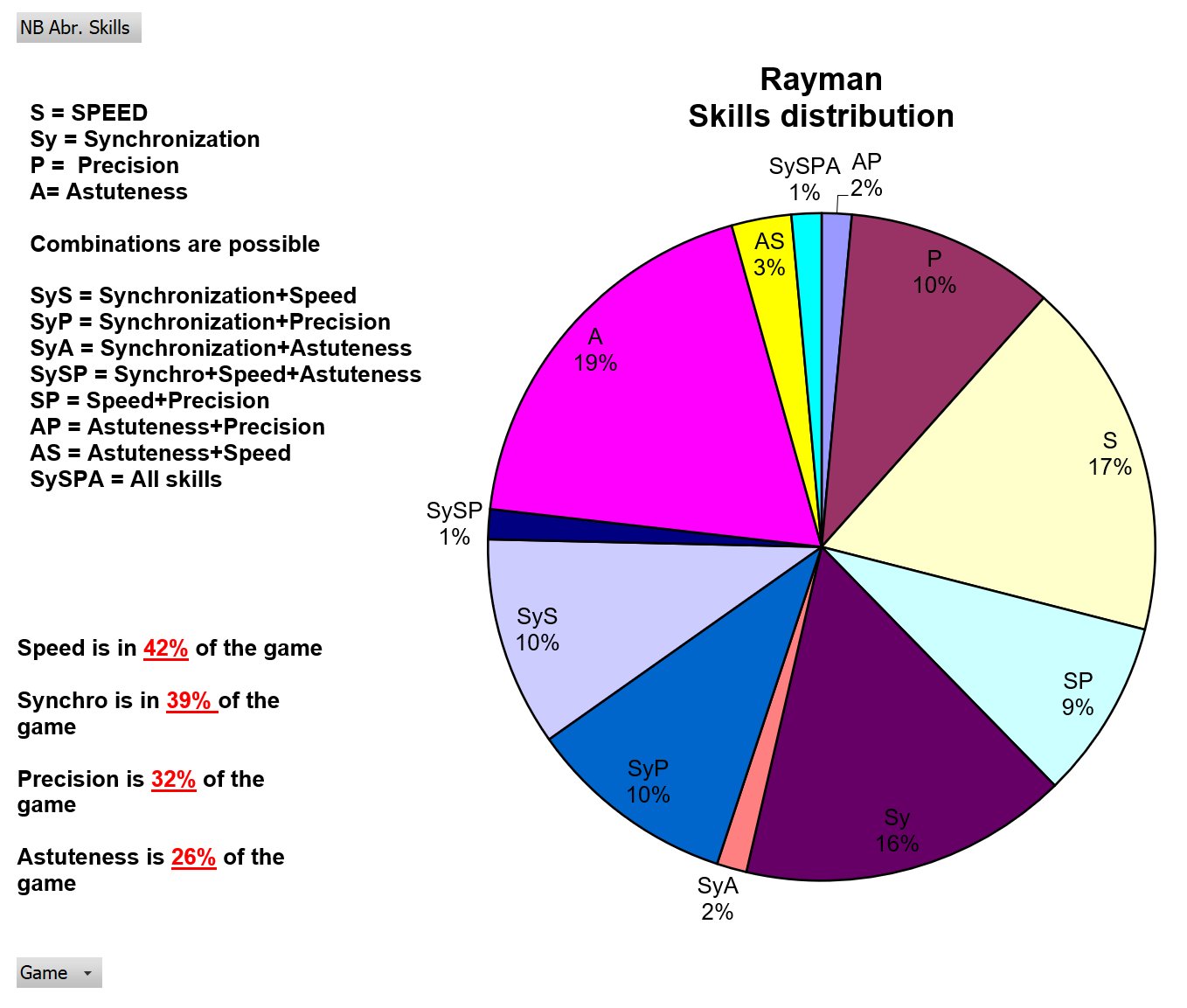
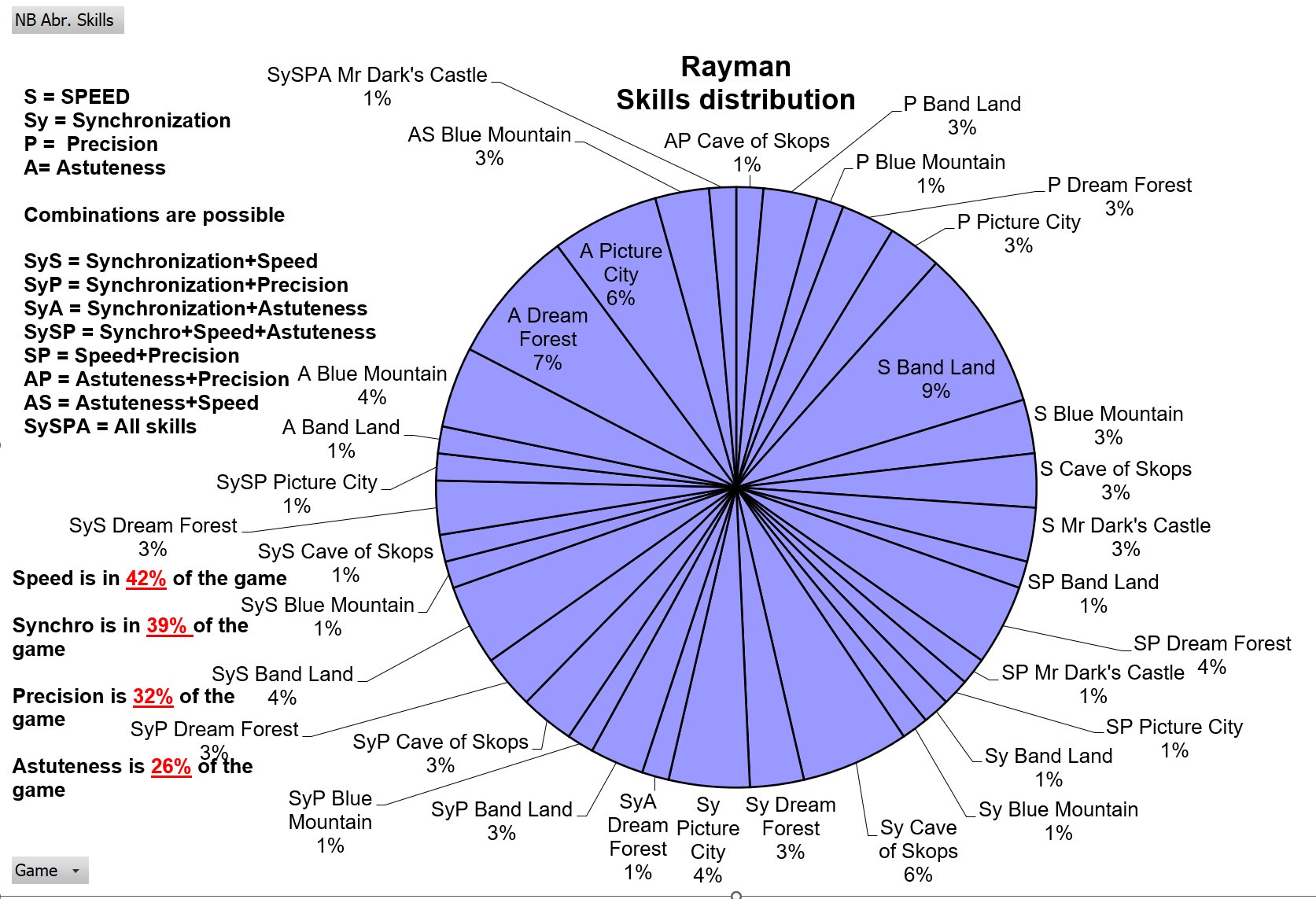
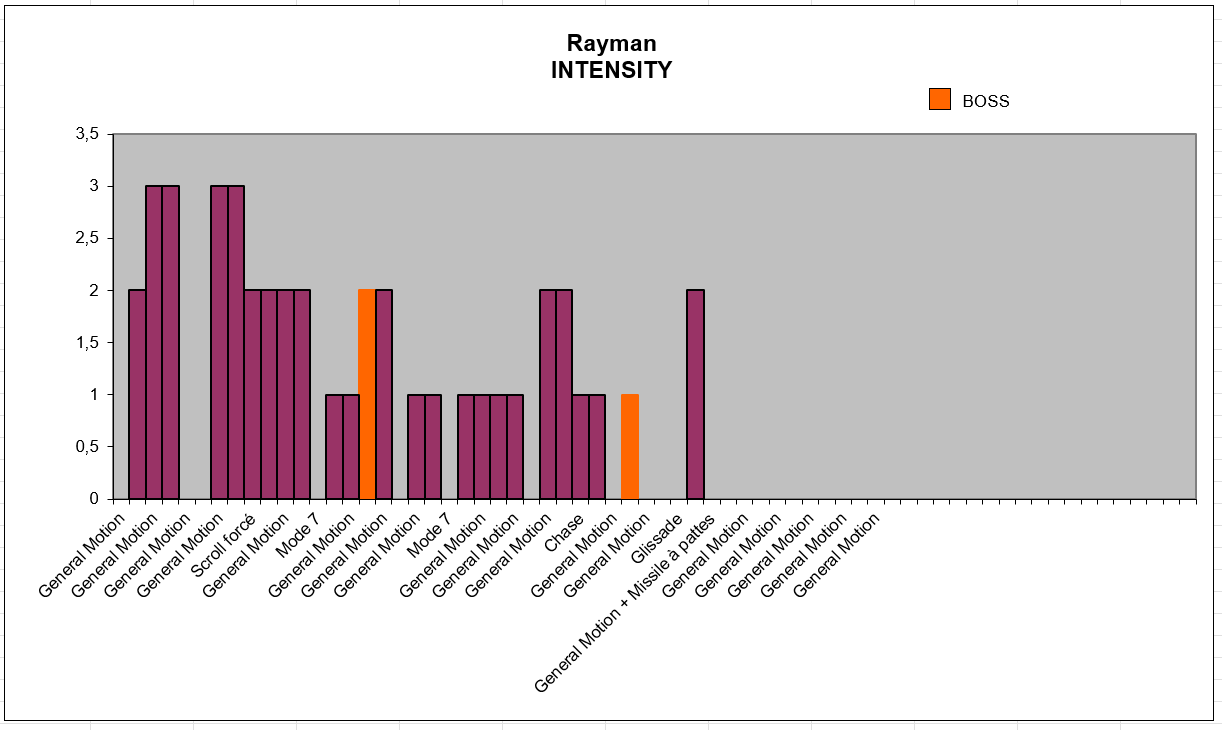
Well that was a quick break! Let's continue with some graphs.
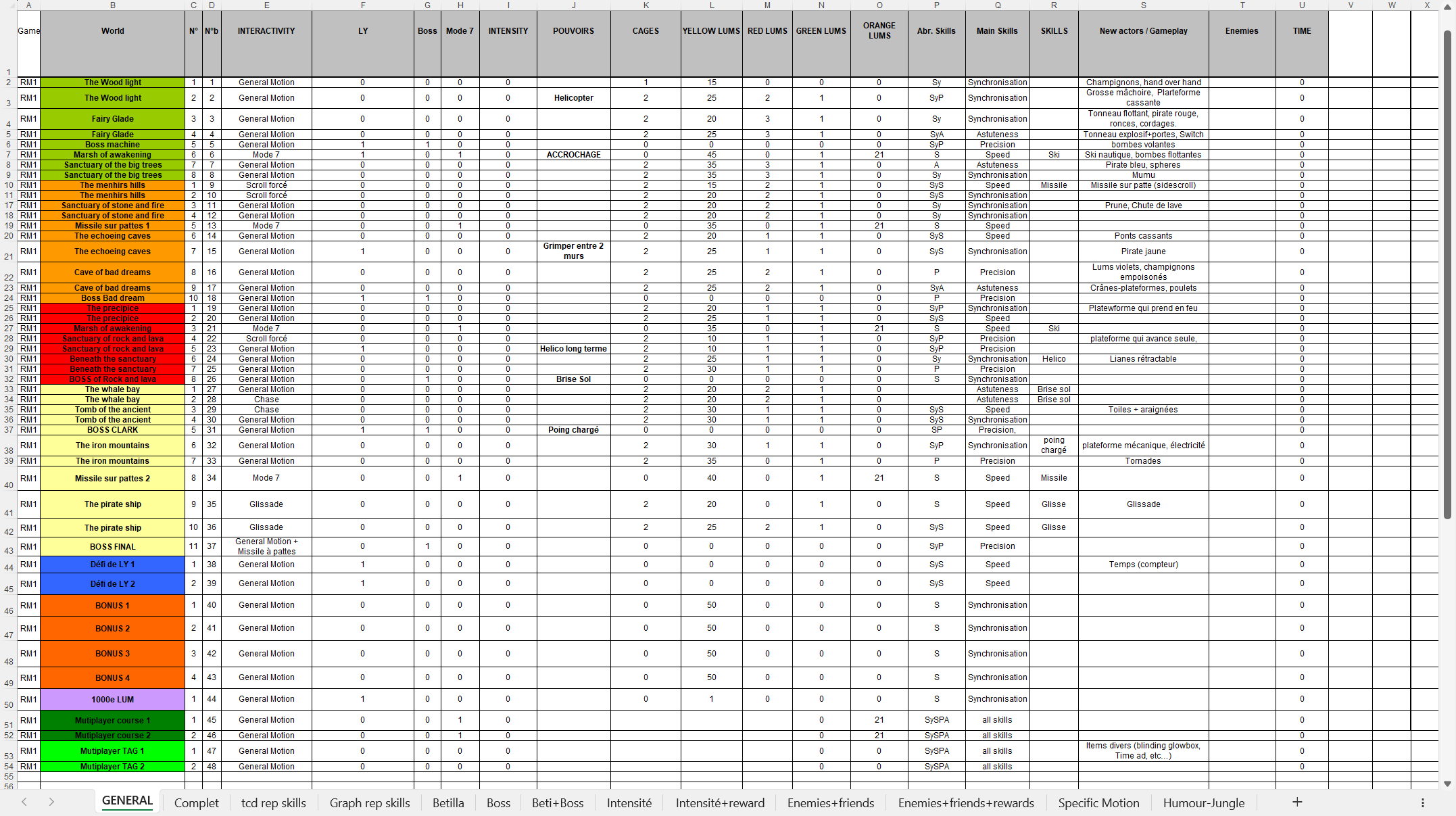
Here they were looking at the balance in Rayman 1 to compare against.
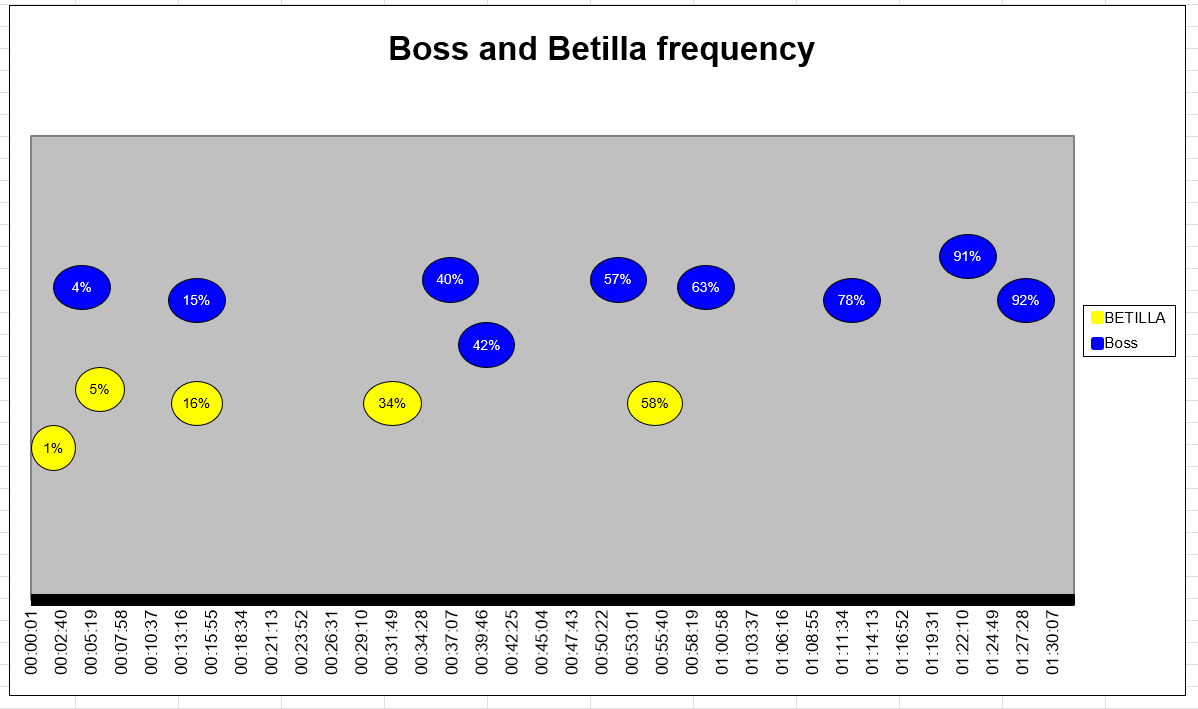
Here are graphs I don't really know how they work or what they're for, but they sure were trying to mathematically calculate the balance of the game! And the humor. That seemed very important to them.
Alright, let's move on to more personal stuff! 3 of the devs wrote post mortems for the development. They're quite interesting. Let's start with Jacque Langlois.
Since it's in French I'll just summarize a bit what he said. I've had to translate it, so I can't verify it's fully accurate.
- He complains about the communication between teams not being handled well.
- He talks positively about the engine having been worked on from developing earlier games.
- A lot of complaints about the testing process. Poor communication, lacking descriptions and too much focus on language bugs.
- He liked the body shot power and new abilities in the game.
- Rayman's hitpoint system was not well handled.
- Adding effects to improve the atmosphere, like butterflies, bats etc., were handled late and not planned well.
- He praises Eric Pelatan for his work on graphics in the game, making the levels come alive. However, he caused other artists have less to do themselves.
- He praises the work on animations, but also mentions how the quality on some animations, like bosses, were lacking.
Next we have the post mortem by Marc-Olivier Riel. In French too, so I'll summarize again.
- He also mentions how effects were added late in development.
- He talks about several technical issues with the music manager, actor code etc.
- He wishes they'd used a nicer font.
- He praises the engine for making the job easier to do.
- The multiplayer was easier to do than he thought.
- The GameCube connectivity took time, but without too many issues.
- Things were not clearly outlined at the start, making planning hard.
- Too many changes were made late in development, making testing hard.
- He complains that insta-kill death pits are the main way you die, making the hit-points system not well utilized.
- Game was not well balanced - he thinks the last world is the easiest.
- He praises the graphics and animations, but did not like the lava splash under plums or the vehicle in the Mode7 race levels.
- Too much focus on language bugs and not enough on gameplay bugs.
- Testing process didn't go very smoothly.
He also mentions some Nintendo-Ubisoft checklist they used which was hard to follow.
Now for the last post mortem, this time by Pascal Lalancette. And would you know, it's in English!
Like the other devs he praises the tools
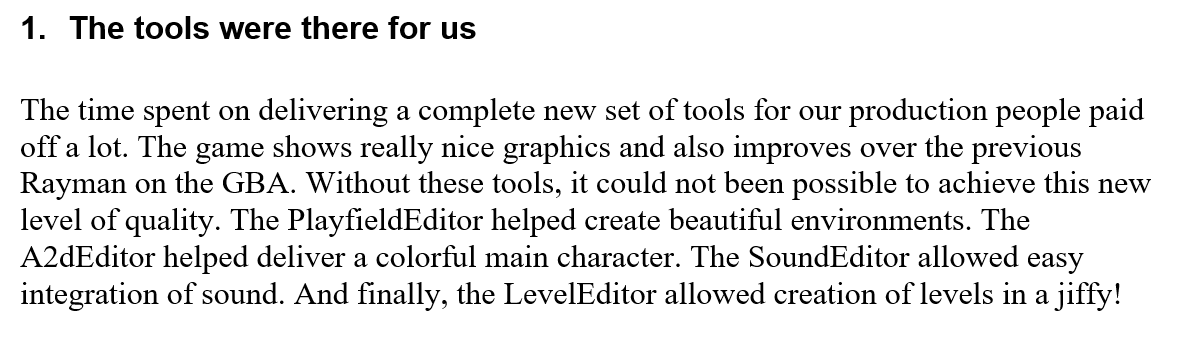
I appreciate him praising his team, but praising people for working all night to get things done? Yikes.
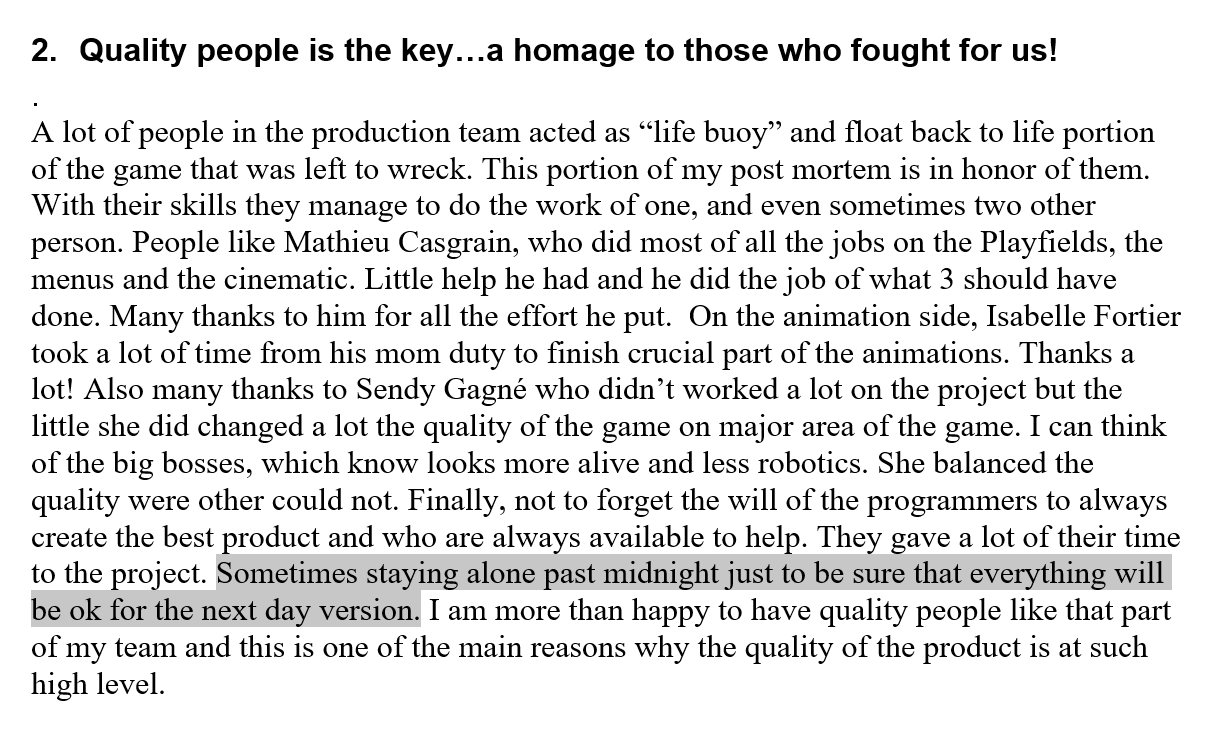
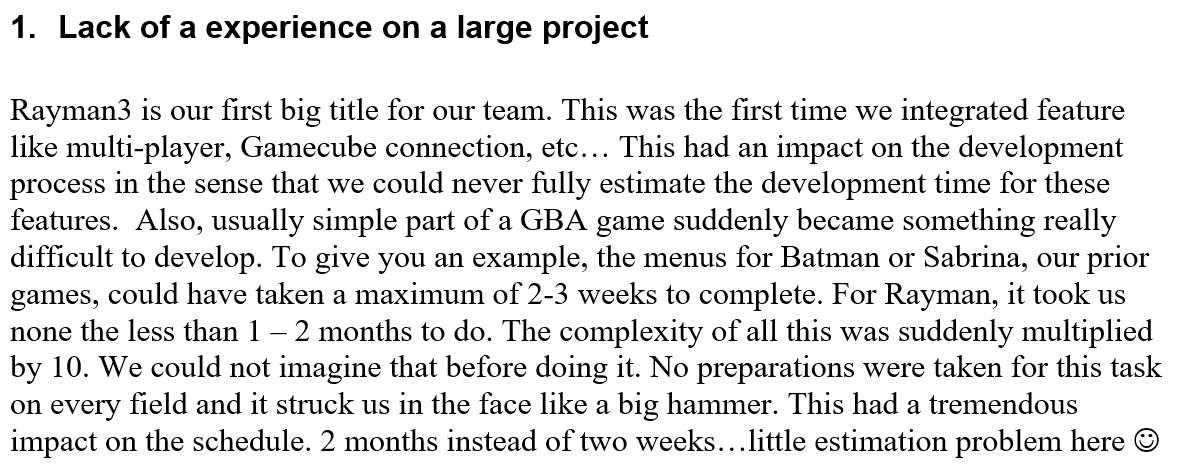
Several planning issues during development
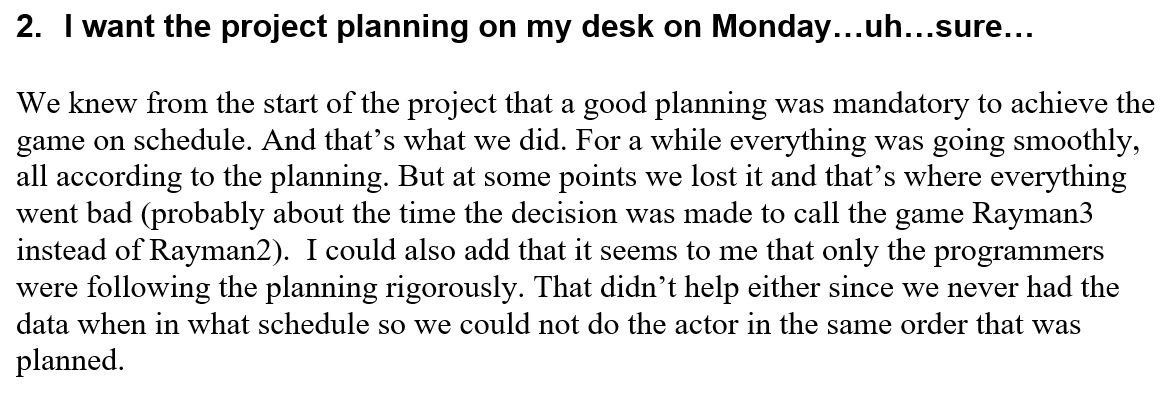
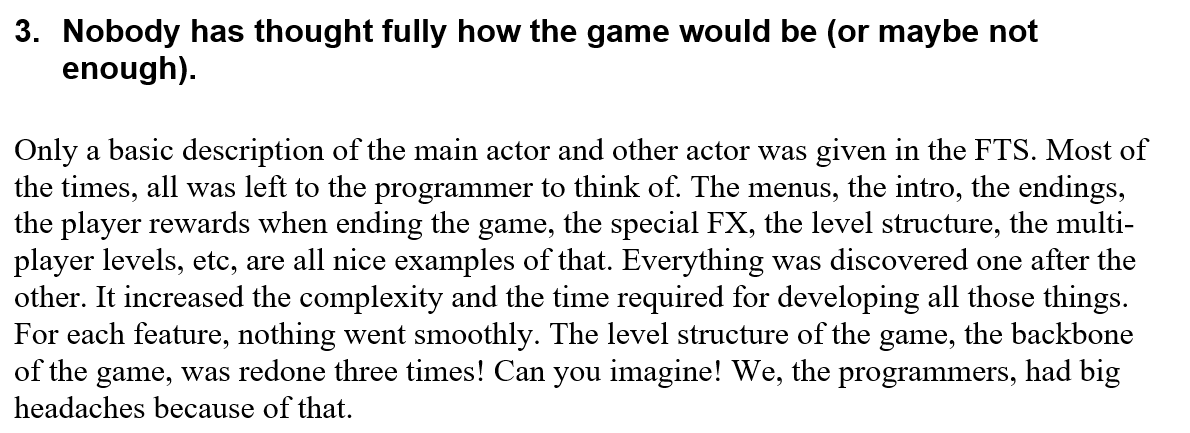
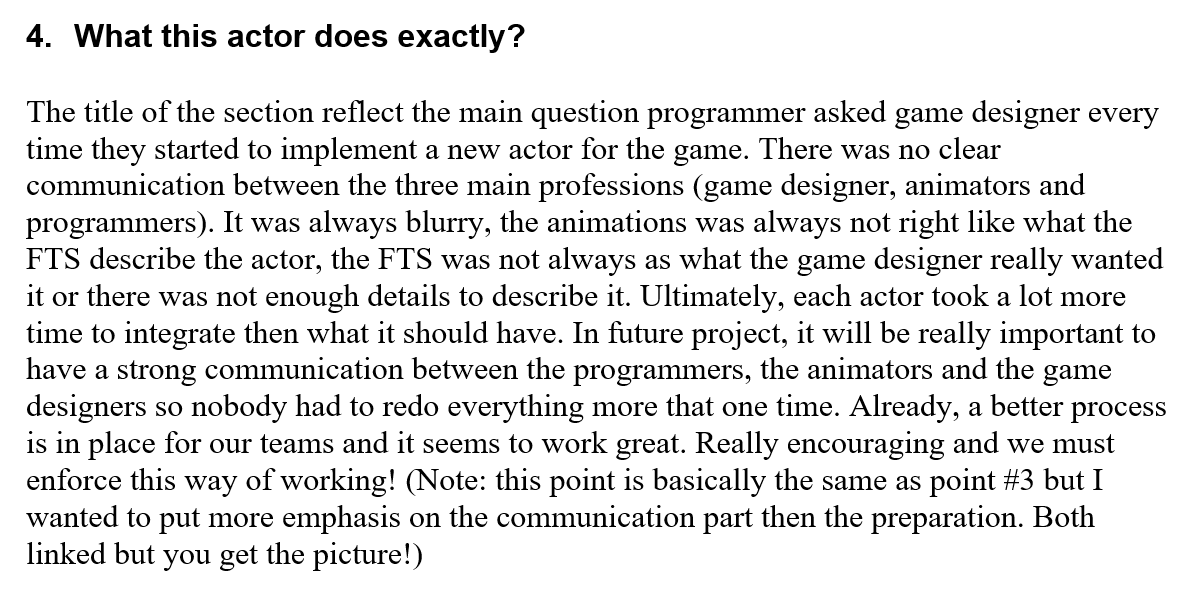
Here he complaints about motivation from some team members and how he is happy they left the company...
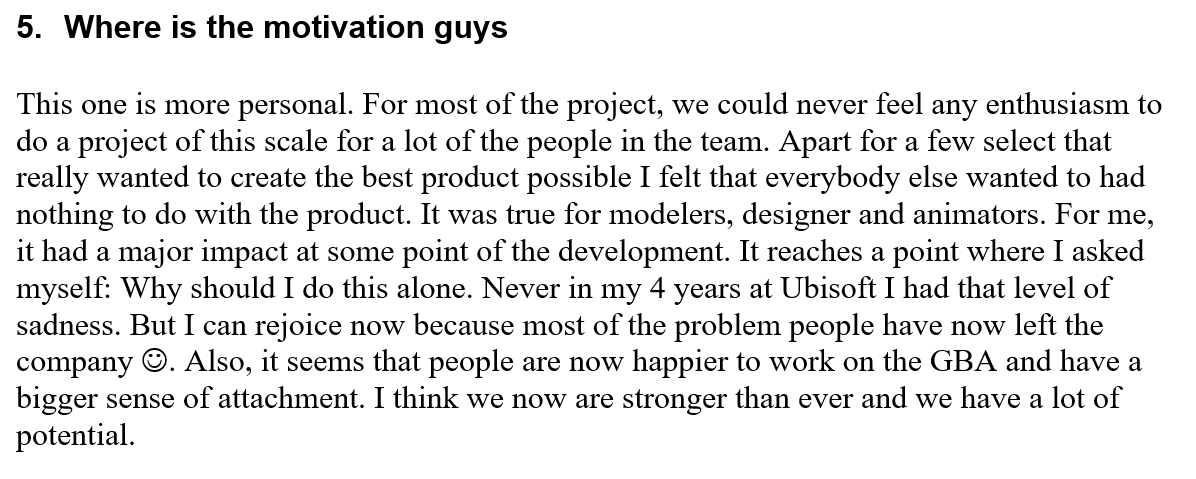
More issues with testing
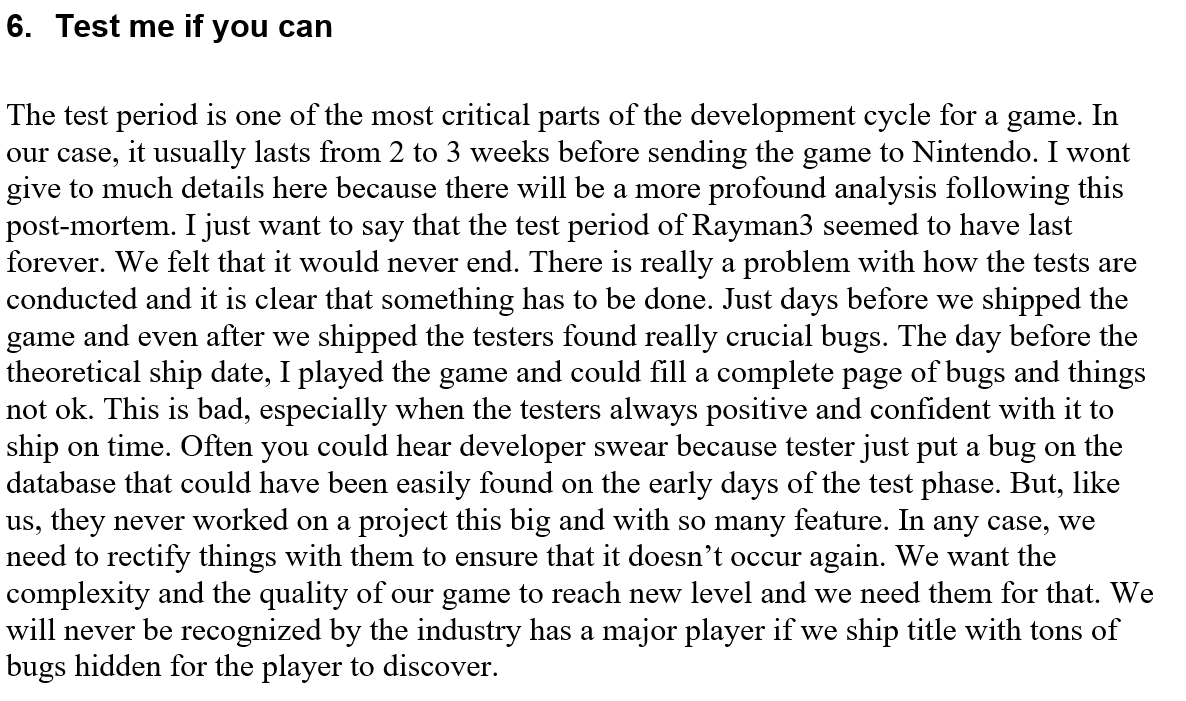
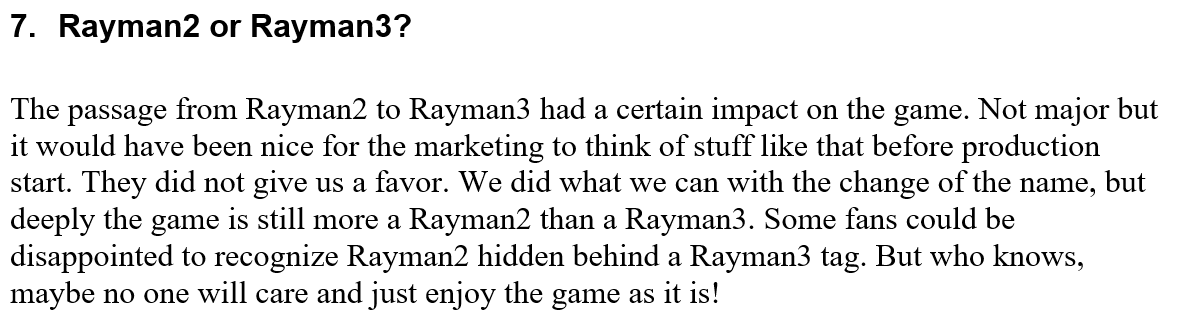
And here it is, him discussing the change from Rayman 2 to Rayman 3 and how it hurt the game a bit.
And his conclusion along with some stats about the development
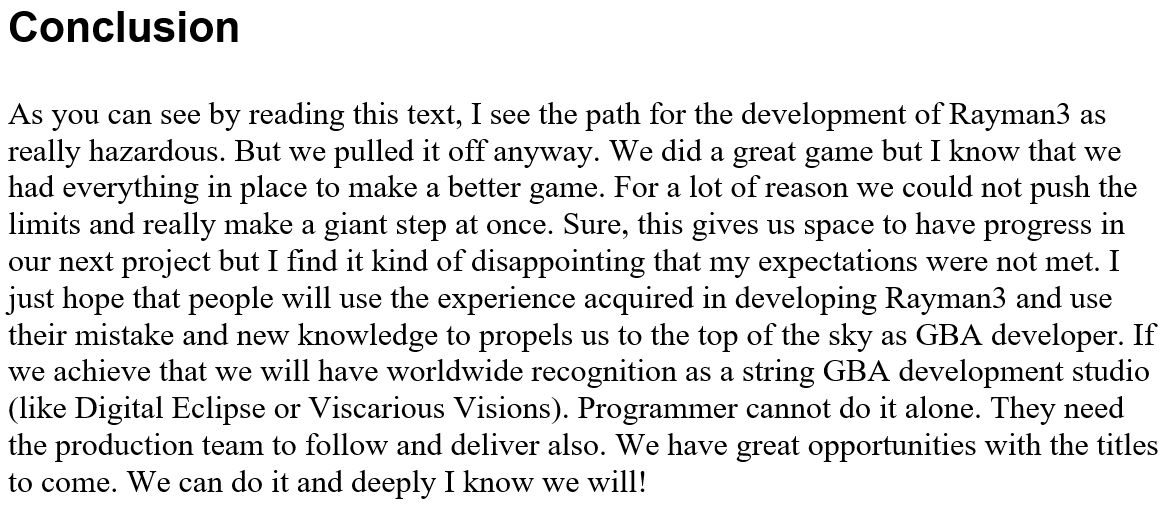
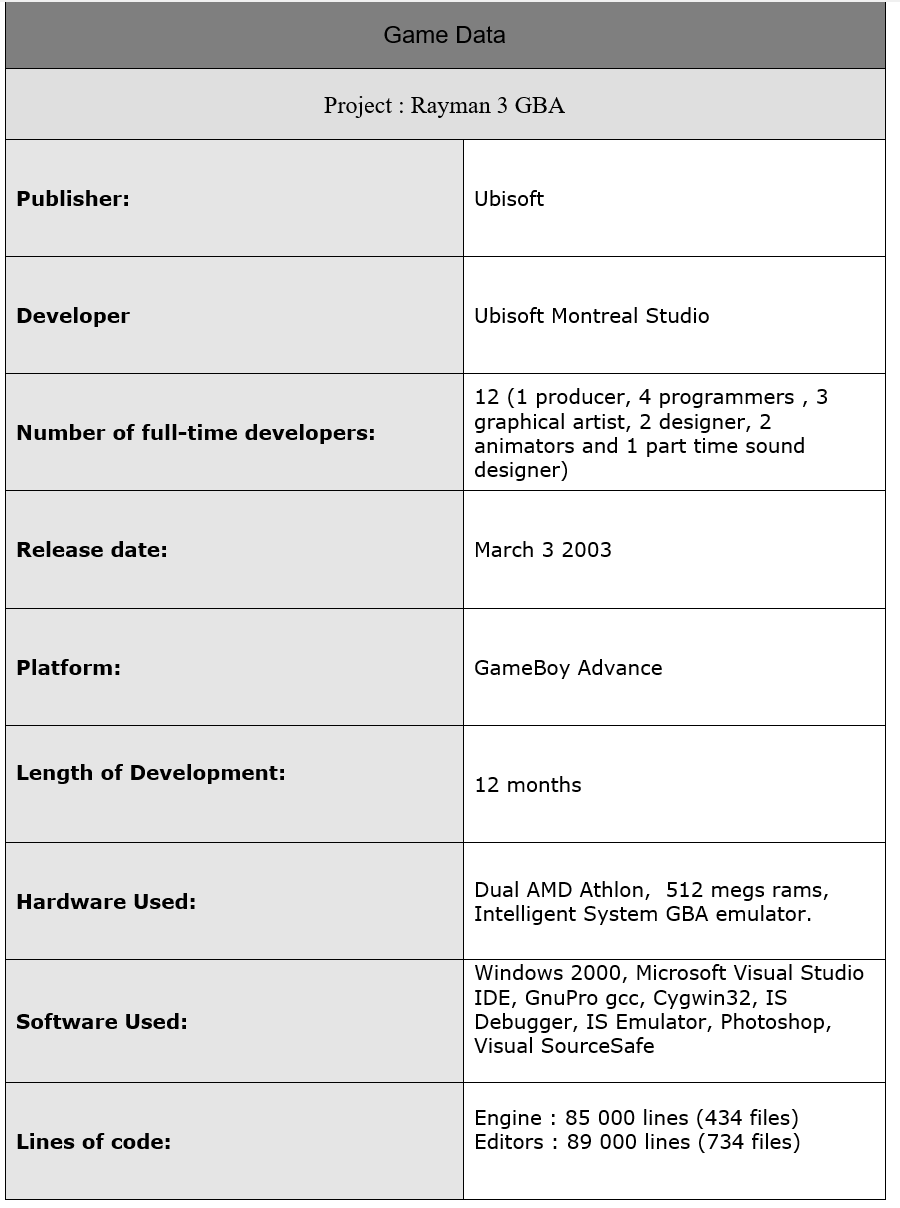
And that's it for the post mortems. I'll be back later with event more stuff from this!
Let's finish this now! Next folder is for test analysis, written by different members of the dev team. These aren't as interesting. They outline many issues with the testing process, where they didn't have any communication with the testers and how...
...they felt the testers mostly focused on language issues rather than gameplay ones. One of them mentions examples of things that should have been listed for testing, such as testing the climbing camera, testing jumping over the boulder that chases you etc.
Many important bugs, such as with the purple lums, came in way too late during development. They also discuss what could be improved in the future, such as updating design docs during development, not waiting until the end to integrate languages and more.
"The "Nintendo and Ubi Soft Standards for Game Boy Advance V.2.5" will be released after the approval of Rayman 3 GBA."
I wonder what that is? There are several mentions of some Ubisoft and Nintendo checklist for GBA games, which the devs complain about not being easy to use.

Here are some common issues one dev lists:
- Actors disappearing due to incorrectly placed activation zones.
- Bad tile placements.
- Sound looping issues.
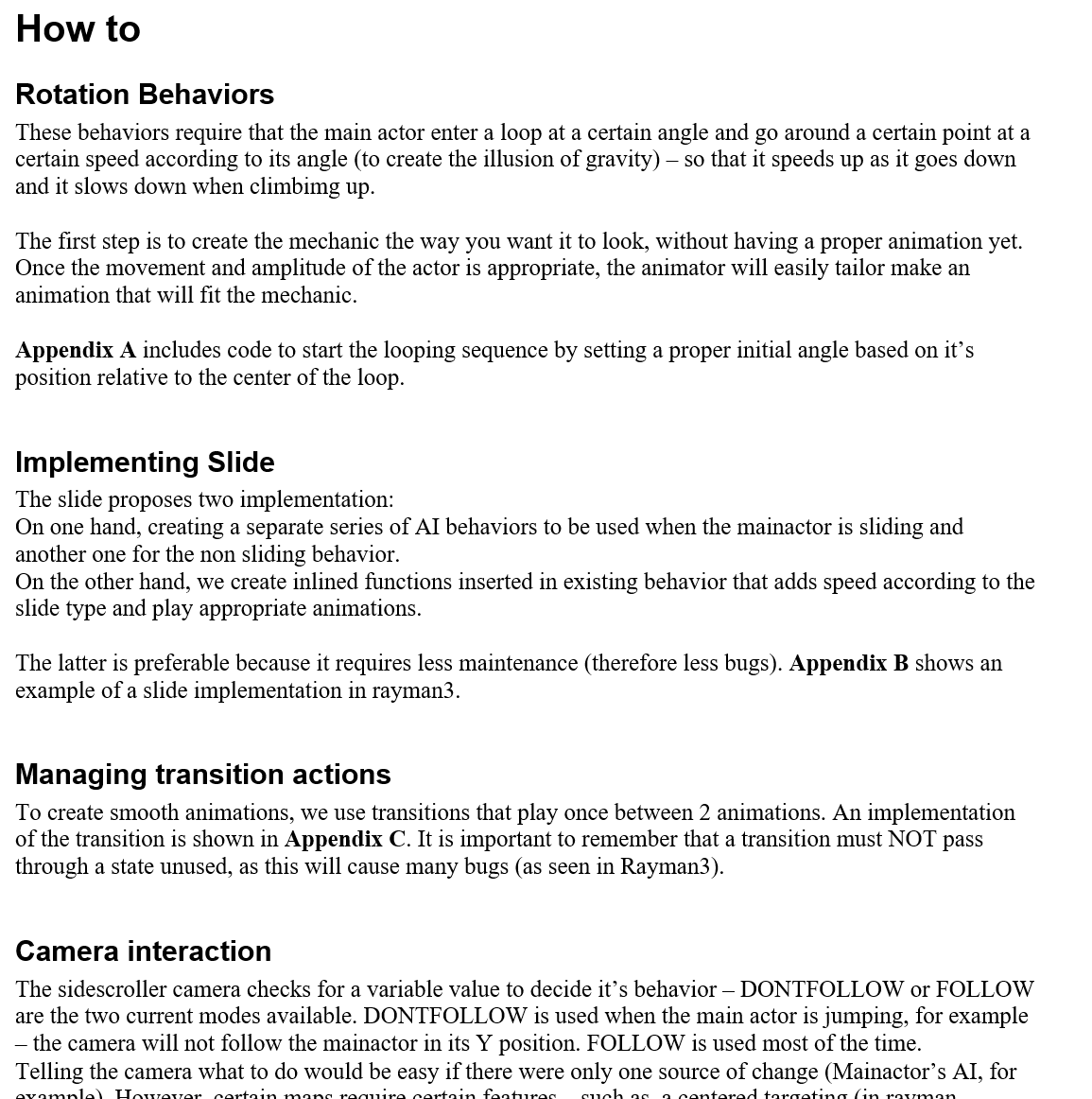
Now let's move on from testing to some more technical details. Here's a doc on how to create actor AI.
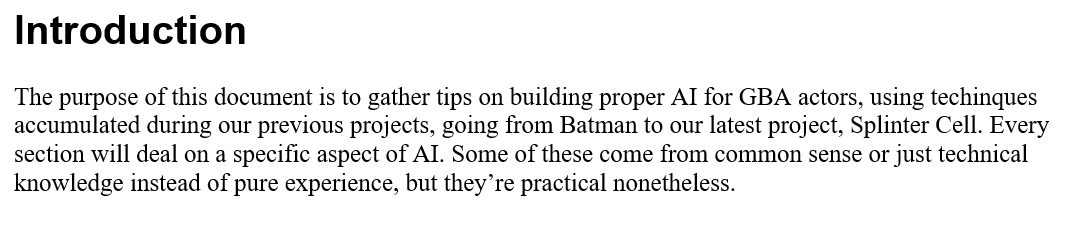
As someone who's spent a lot of time reverse engineering the engine for my PC port this is so interesting! But I get that this won't mean much to most people so I won't spend more time on it.

Next document is about creating special effects on the GBA, something I feel Rayman 3 GBA does very well.

Here it details window effects, such as the circle transition you see in the game between levels.
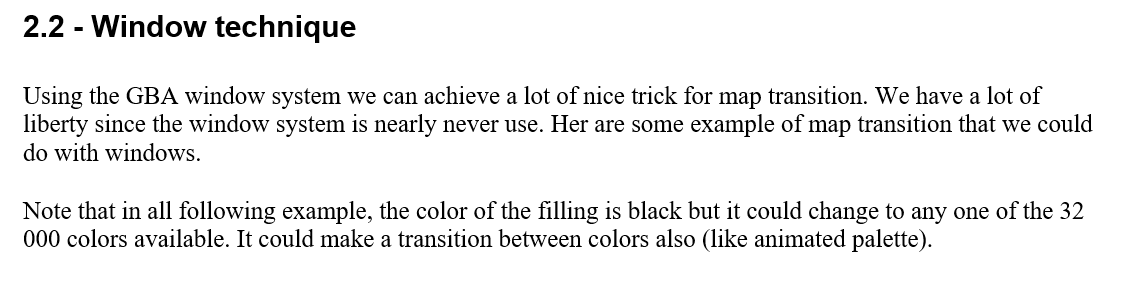
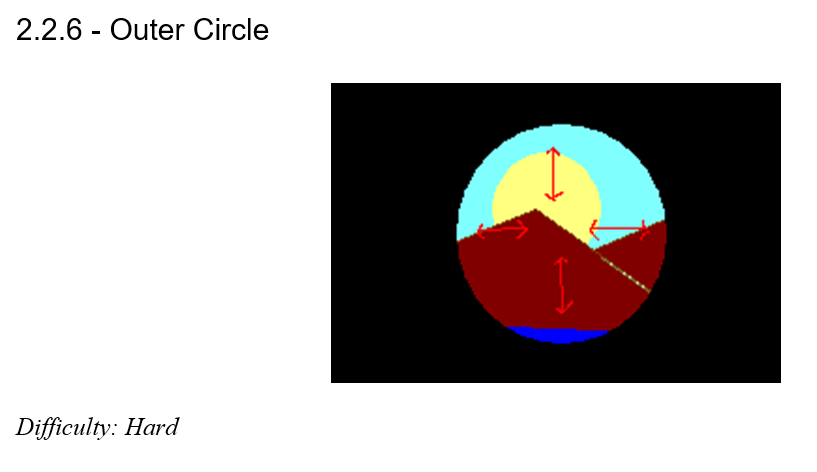
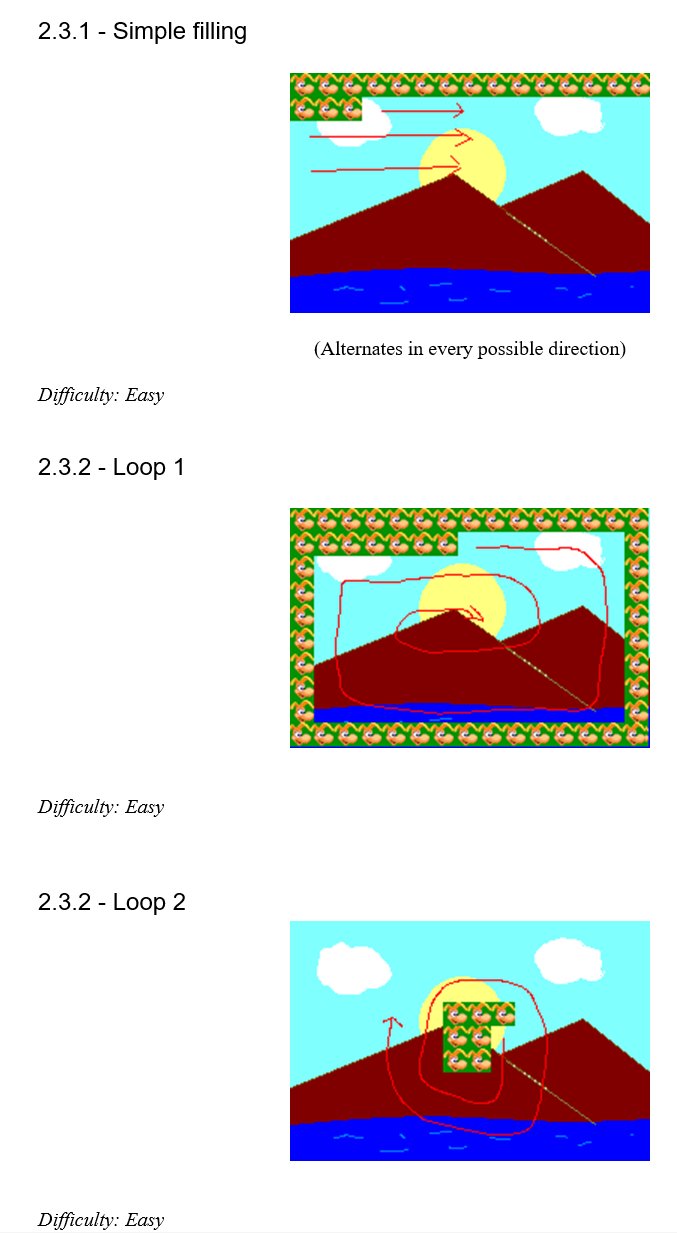
There are concepts for many other effects too
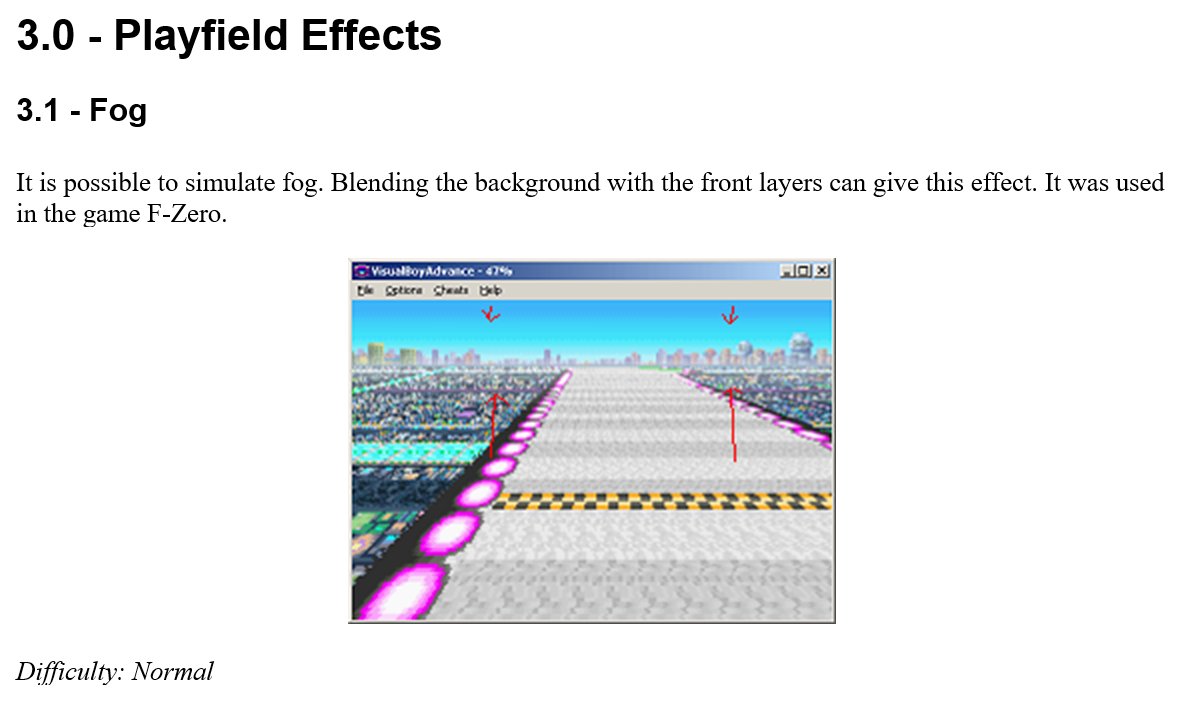
Here they look at effects from other games, and they seem to be using emulators such as VisualBoyAdvance to check them out.

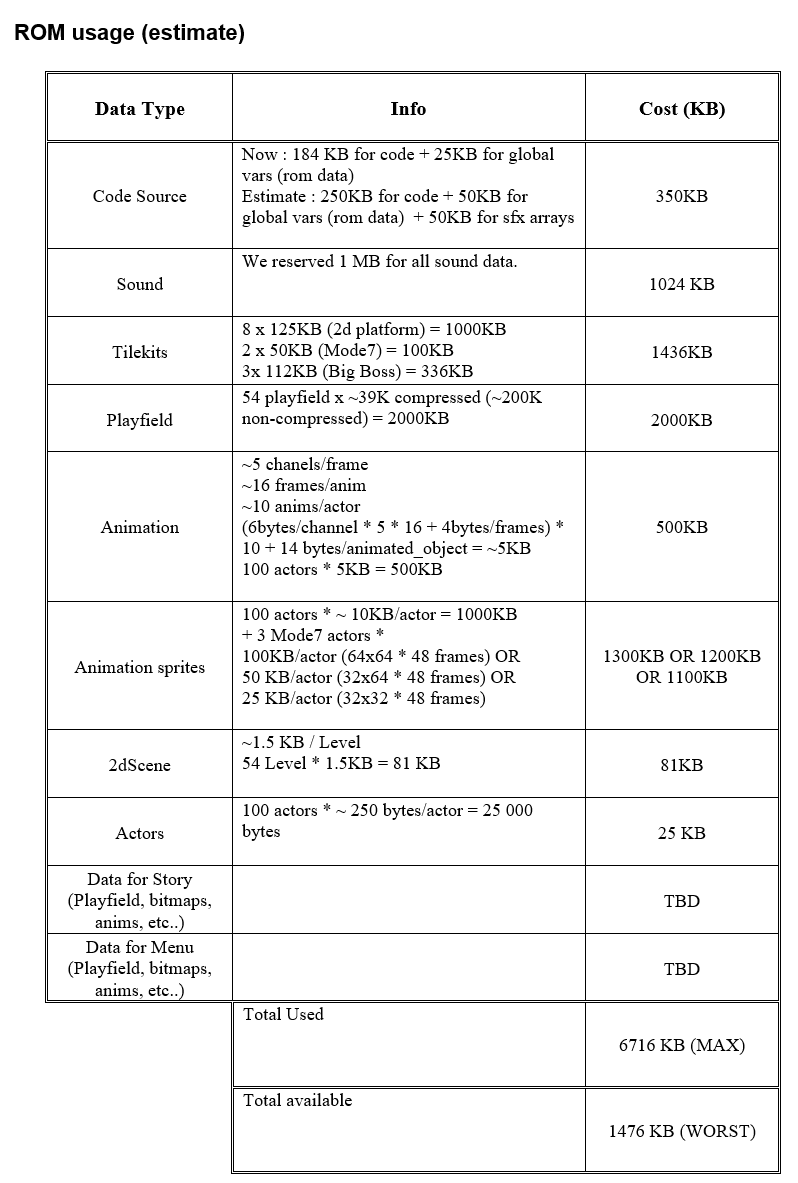
Next up they were trying to profile how much space the game would use on a rom. Here's a table with estimates.

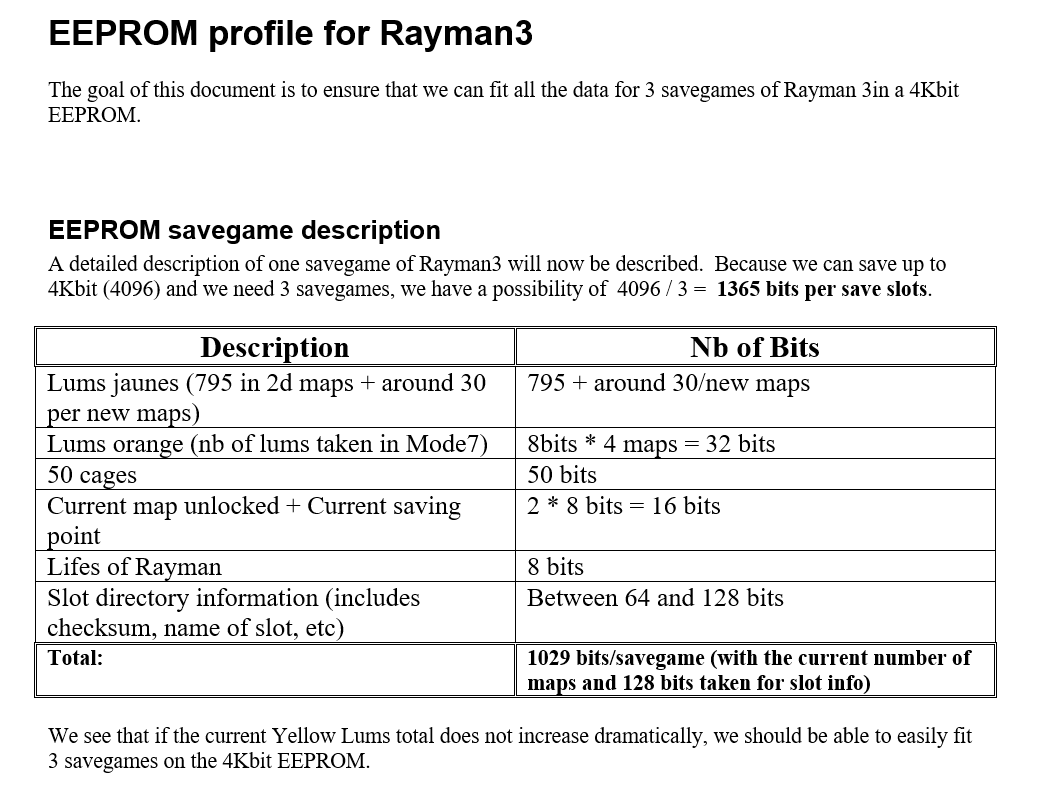
They did the same with the save data. Interestingly orange lums from Mode7 levels seem to be counted separately? They were separate in a previous level document too.
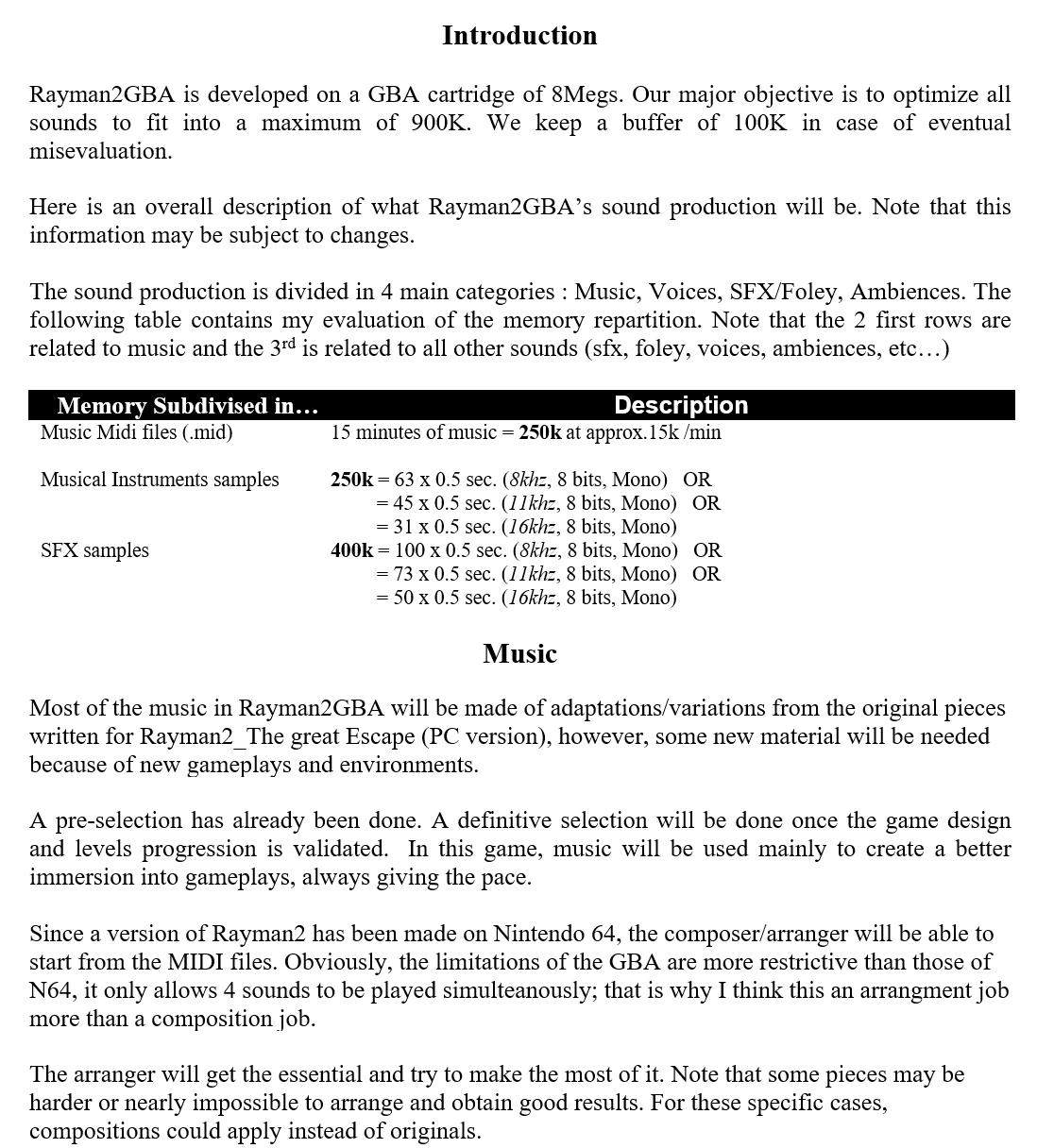
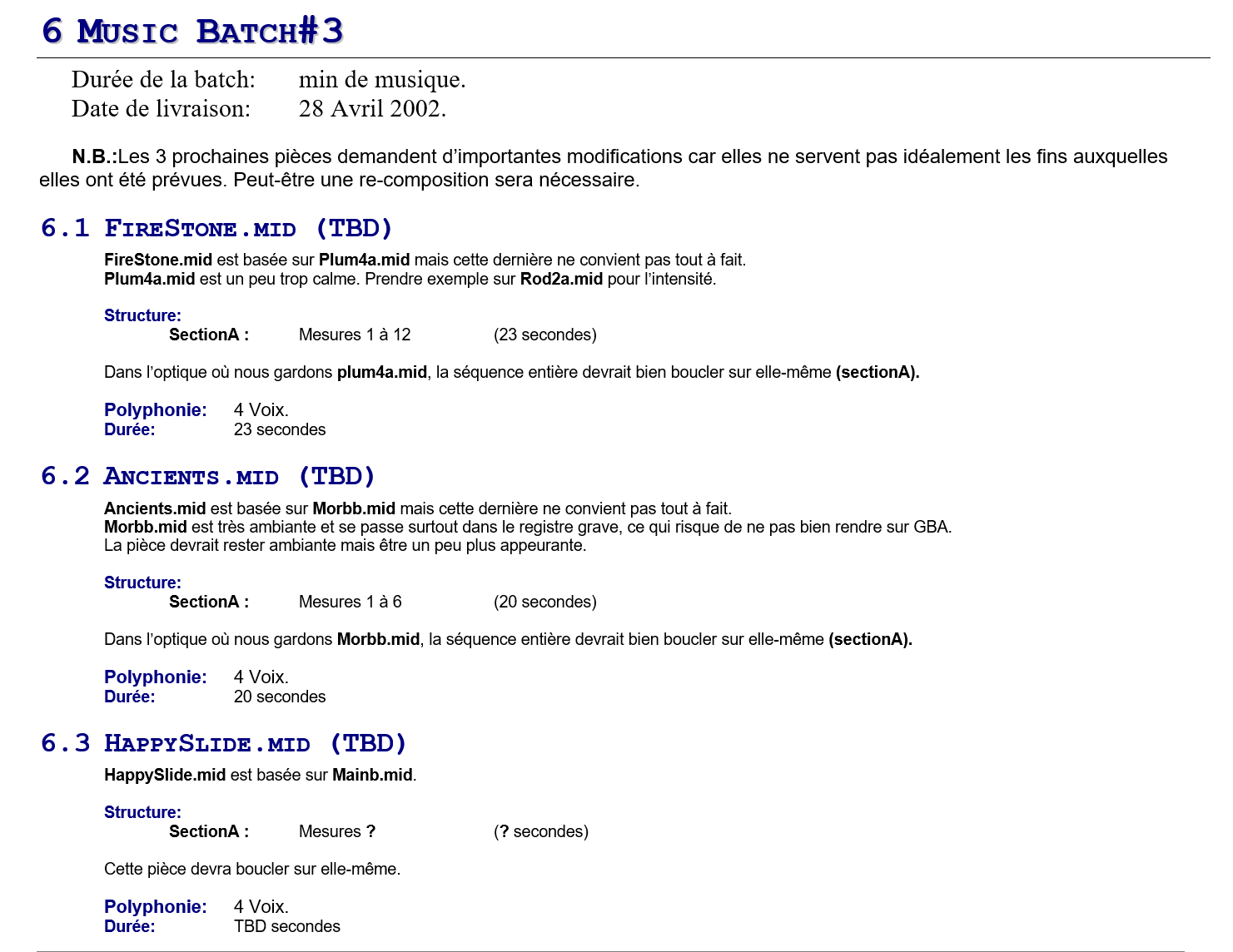
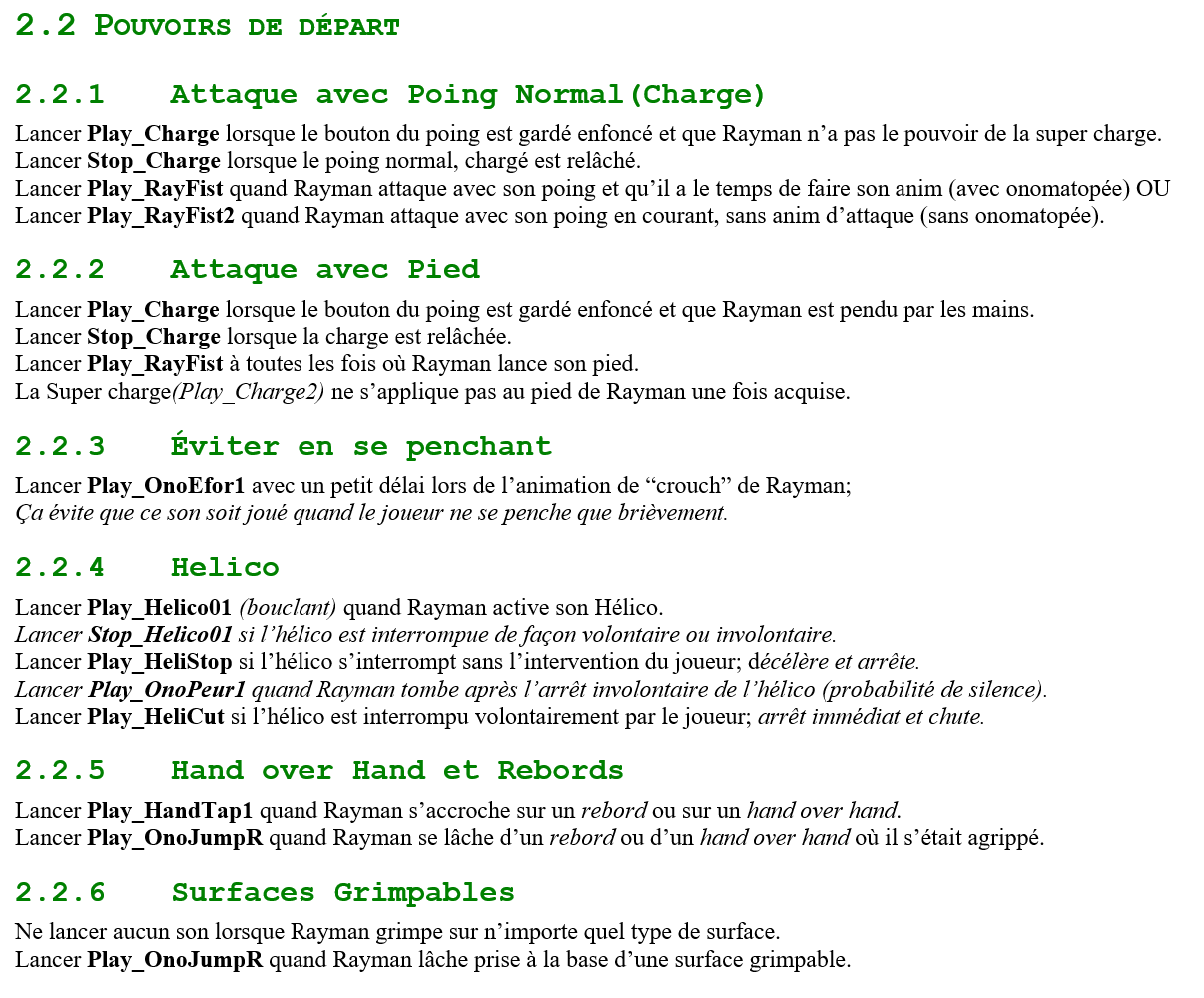
Lastly are several docs on the sounds. That's not really my strong suit so I don't have much to say here, but they mention how they used the Rayman 2 N64 Midis as a base, which was pretty obvious.
And that's a wrap! Thanks for reading all of this
Hopefully this can be documented on RayWiki soon enough. I might also make another thread on the contents of the rom later on.


 Ryemanni yet again accidentally implements unused features!


