Livingstone
- This article is about the recurring enemies in the Rayman series. For the trophy/achievement from Rayman Origins, see Explorer.
Livingstones, also known as explorers and Lividstones, are recurring enemies in the Rayman series. They made their first appearance in the original Rayman game, and later appeared in Maths and English with Rayman, Rayman Designer, the Game Boy Advance version of Rayman Raving Rabbids, Rayman Origins, Rayman Jungle Run, and Rayman Adventures. Their name is derived from that of famous Scottish explorer David Livingstone.
| Livingstone | ||
|---|---|---|

| ||
| Alignment | Bad | |
| Appears in | Rayman, Maths and English with Rayman, Rayman Designer, Rayman (GBC), Rayman 3 (cameo), Rayman Raving Rabbids (GBA), Rayman Origins, Rayman Jungle Run, Rayman Legends, Rayman Adventures, Rayman: The Board Game | |
| Location | The Dream Forest, Spellbound Forest, Rainy Forest, Ancient Forest, Forest world, Jibberish Jungle, Ticklish Temples, Teensies In Trouble, Medieval Mayhem, Toad Story (Rayman Adventures) | |
| Resistance |  (Rayman, Maths and English with Rayman, Rayman Designer, Rayman Raving Rabbids (GBA)) (Rayman, Maths and English with Rayman, Rayman Designer, Rayman Raving Rabbids (GBA))
| |
| Attacks | Contact, hat throw, nailed planks | |
| Species | Nightmare of Polokus | |


A variant of Lividstones called Jacquouilles also appears in Rayman Legends, Rayman Adventures and Rayman: The Board Game.
In Rayman
In the original Rayman game, Livingstones are common enemies who only appear in levels of the Dream Forest. They are averagely-resistant enemies who freely wander on their platform, turning backwards when they face an obstacle. Rayman must simply avoid contact with them. If not eliminated in one hit, they go crazy and charge toward him until he punches them again or they fall in the water. In the Atari Jaguar version, however, they will run toward him regardless of what he does.
Besides Rayman's fist, another way of defeating them is for him to use his grimace, which frightens them and makes them run away from instead of towards him and eventually fall in the water. Rayman can also punch a plum onto their heads causing them to become dizzy but continue walking as usual, allowing him to jump onto the plum and use them as a walking platform to reach higher places or finish them off normally.
Another variety of Livingstones are little Livingstones which, as their name implies, are shorter than standard Livingstones, but they are also more aggressive in their attempts to hurt Rayman and are more adept at dodging blows from his telescopic fist.
In Rayman Designer
In Rayman Designer, the Livingstones appear as enemy events in the Jungle world. There are three types of them available.
- Big livingstone - Goes back and forth on the platform. Rayman can get rid of him by punching him, frightening him by making faces, or throwing a plum on his head.
- Little livingstone - Goes back and forth on the platform.
- Ferocious little livingstone - Goes back and forth on the platform and throws his arms towards Rayman to hurt him.
-
 A typical Livingstone, as seen in the original Rayman game.
 -

-


In the Game Boy Color version of Rayman
The standard variant of Livingstones appear in the Game Boy Color version of Rayman, in the worlds Spellbound Forest and Ancient Forest.
They are almost identical to those in the original Rayman game, except that they have white bodies and hats and green shoes. They however behave in a similar fashion to the little Livingstones from that game, in that they can duck to dodge Rayman's fist and throw their hands towards him.
Once defeated, their body disappears and only their head remains, only to also disappear moments later.
It is possible to punch a plum onto their heads, but instead of remaining calm as in the original Rayman game, they will start running around. They are invincible in this state, though punching them will make them stop for a brief moment and play a unique animation. Livingstones no longer run, however, if not defeated in one shot, and instead continue their patrol until they are beaten.
In promotional screenshots from an early version of the game, Livingstones are shown to have been of a different, darker color originally.
-
 A Livingstone in the Game Boy Color version of Rayman
 -

-
 A Livingstone throwing his hands towards Rayman
 -
 A Livingstone running with a plum on his head
 -
 A Livingstone with different colors in an early version of Rainy Forest


In Rayman 3
Livingstones do not make a physical appearance in Rayman 3; however, Rayman must occasionally throw a plum onto a post to create a platform in order to progress. These posts bear images of Livingstones, in reference to the role they played in the original game.
-
 The plum-posts in Rayman 3 bear images of Livingstones, in reference to their role in the original Rayman game.

In the Game Boy Advance version of Rayman Raving Rabbids
In the Game Boy Advance version of Rayman Raving Rabbids, Explorators have a significantly altered appearance and appear in the Forest world. They no longer have noses or moustaches but have visible mouths, they wear a belt around their pants, their gloves are a different color and their shoes have a more defined look. They also carry around sacks and can use their hats as a weapon. They can however still be defeated by being punched.
-
 A Livingstone, as seen in the Game Boy Advance version of Rayman Raving Rabbids.

In Rayman Origins
They may look (and SMELL) awful, but are surprisingly easy to defeat. Ugh, THIS guy! Seriously, he STINKS. This hygenically challenged villain reports to the Hunters and roams the land, imprisoning sweet, little Electoons. While the Lividstones are undeniably vile creatures, they're actually pretty pathetic and can be quickly defeated with a quick slap, punch, kick or dodge.—Official site, Rayman Origins
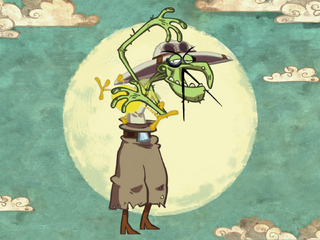
Livingstones return as enemies in Rayman Origins, but here they are renamed Lividstones, perhaps to suggest a connection with the Livid Dead. Like most of the returning characters from the original Rayman, they have been redesigned, and now have limbs (rendering Rayman himself almost unique), visible mouths, longer and more crooked noses, and more scraggy body structures. Their appearance is also more zombie-like. Like most enemies in the game, they have only one resistance point, and can be defeated and bubblized easily. They can no longer be driven crazy by punching or grimacing at them. Their way of offense is to either headbutt Rayman or wave their hands in a cowardly manner. They are revealed to enjoy bullying Lums, poking their faces, playing basketball with their bodies and using their heads as deodorant. They are also revealed to be the lackeys of the hunters. The smaller variant of Lividstones are not present in this game, but there are different kinds of Lividstones, some of them holding bamboo sticks to attack the characters, and others with spikes on their hats to hurt anyone who attempts to crush them.
-
 Lividstones will become inflated after getting hit, allowing them to be bubblized.
 -
 Lividstones, as seen in Rayman Origins.
 -
 Lividstones with spiky hats, as seen in Rayman Origins.


In Rayman Jungle Run
In Rayman Jungle Run, Lividstones appear in various levels. They have the same behavior as in Rayman Origins, and some have spikes on their hats.
Lividstones can also be seen on unlockable artworks in the image gallery.
-
 Lividstones in Beware the Spiked Helmets!, including some with spikes on their hats
 -
 Artwork of a Lividstone rubbing his armpit with a Lum
 -
 Artwork of a Lividstone poking a Lum
 -
 Artwork of a Lividstone hit by Rayman


In Rayman Legends
Main article: Jacquouille
In Rayman Legends, a variant of Lividstones called Jacquouilles is introduced. While physically identical to the Lividstones from Rayman Origins, they wear different clothes and are no longer explorers, but rather a gang of bandits who break into the houses of the helpless Green Teensies who inhabit the area.
The Lividstones from Rayman Origins also appear in Rayman Legends, but only in the Back to Origins levels, with the exception of the level Gloo Gloo of 20,000 Lums Under the Sea where a single Lividstone is present aboard the warship that attacks the heroes.
-
 Jacquouilles in Rayman Legends
 -
 A Jacquouille wearing a bandana in Castle Rock
 -
 Concept art for bandit and Egyptian-like Jacquouilles


In Rayman Adventures
Main article: Jacquouille
In Rayman Adventures, both the Lividstones from Rayman Origins and the Jacquouilles from Rayman Legends make a return, with the latter being a lot more common in the game. Notably, two Jacquouilles feature in the introduction scene, where they are seen stealing the Ancient Eggs from the Sacred Tree, setting the events of the game into motion.
-
 The Jacquouilles who find the Ancient Eggs
 -
 A pair of Jacquouilles being defeated
 -
 A Lividstone like those from Rayman Origins being defeated


Rayman: The Board Game
Main article: Jacquouille
Jacquouilles are set to be included as enemies in Rayman: The Board Game. They will appear in the Forest board.
Rayman Legends Retold
Main article: Jacquouille
Jacquouilles return in Rayman Legends Retold, now simply known as Livingstones.[1] They reprise their roles from the original game as the most common enemies in the Old Teensie Kingdom.
Livingstones also appear in the Land of the Livid Dead, now corrupted by the new villain and covered in darkness. By using the Power of Light on them, the heroes can cleanse their corruption and leave them vulnerable to attacks.
-
 A row of Livingstones in the remade version of Castle Rock.
 -
 A corrupted Livingstone being hit by the Power of Light.


Gallery
-
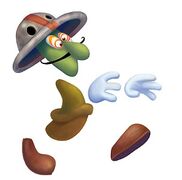 Artwork of a Livingstone from the original Rayman.
 -
 The Dream Forest's introductory image shows a Livingstone carrying a cage.
 -
 Artwork of some Livingstones from Rayman CP.
 -
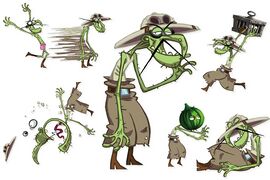 Artwork of some Livingstones from Rayman Origins.
 -
Concept art for bandit and Egyptian-like Jacquouilles from Rayman Legends.


Names in other languages
| Language | Name |
|---|---|
| English | Livingstone (Rayman Designer)
Explorer (manuals) |
| Chinese (simplified) | 探险家 |
| Dutch | Ontdekkingsreiziger |
| French | Livingstone (Rayman Designer)
Explorateur (manuals) |
| German | Livingstone (Rayman Designer)
Forscher (manuals) |
| Hebrew | סייר Sayar |
| Italian | Esploratore |
| Japanese | 探検家 |
| Korean | 탐험가 |
| Spanish | Explorador |