Rayman 2: Difference between revisions
| Line 509: | Line 509: | ||
* The plume appears in all versions of Rayman 2, which references the first Rayman game. | * The plume appears in all versions of Rayman 2, which references the first Rayman game. | ||
* Jano's name may have been derived from that of Janus, the two-faced Roman god of gates. This may be an allusion to Jano's two-faced nature: sometimes he helps Rayman; other times he tries to kill him. | * Jano's name may have been derived from that of Janus, the two-faced Roman god of gates. This may be an allusion to Jano's two-faced nature: sometimes he helps Rayman; other times he tries to kill him. | ||
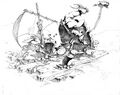
* In promotional artwork for Rayman 2, there are references to the paintings ''The Raft of the Medusa'' by Théodore Géricault, ''Self-portrait with Bandaged Ear'' by Vincent van Gogh, ''Vertumnus'' by Giuseppe Arcimboldo, ''The | * In promotional artwork for Rayman 2, there are references to the paintings ''The Raft of the Medusa'' by Théodore Géricault, ''Self-portrait with Bandaged Ear'' by Vincent van Gogh, ''Vertumnus'' by Giuseppe Arcimboldo, ''The Birth of Venus'' by Sandro Botticelli, ''The Persistence of Memory'' by Salvador Dali, ''M-Maybe'' by Roy Lichtenstein, ''The Kiss'' by Gustav Klimt, ''Guernica'' by Pablo Picasso, ''Composition with Red, Blue and Yellow'' by Piet Mondrian, ''L'Oiseau de Ciel'' (''The Sky Bird'') by René Magritte, ''Vega Kontosh'' by Victor Vasarely, ''Blue Star'' by Joan Miró and ''The Smile of the Flamboyant Wings'' by Joan Miró. | ||
==External links== | ==External links== | ||
Revision as of 07:17, 17 July 2024
- This article is about the second major game. For other uses, see Rayman 2 (disambiguation).
| Rayman 2: The Great Escape | ||
|---|---|---|
 | ||
| Published by | Ubi Soft Entertainment | |
| Developed by | Ubi Soft Montpellier Ubisoft Shanghai (PlayStation) | |
| Produced by | Pauline Jacquey | |
| Designed by | Michel Ancel, Jean-Christophe Guyot, Serge Hascoët, Frédéric Houde, Michaël Janod, Christophe Thibaut | |
| Programmed by | Yann Le Tensorer, Olivier Didelot (engine programming) | |
| Art by | Michel Ancel (artistic director) Jean-Christophe Alessandri, Florent Sacre, Celine Tellier, Paul Tumelaire (graphics) Alexandra Ancel, Hubert Chevillard (graphic research) | |
| Written by | David Neiss (scenarios and dialogue) Michel Ancel (story) David Gasman (English-language translation) | |
| Soundtrack by | Éric Chevalier (original music) Daniel Masson (N64 MIDI adaptation) | |
| Release date | Nintendo 64:
| |
| Genre | 3D platformer | |
| Gameplay mode | Single player | |
| Platforms | Nintendo 64, PC, Sega Dreamcast, Sony PlayStation, Sony PlayStation 2, Nintendo DS, Apple iOS, Sony PlayStation Portable (PlayStation Network), Sony PlayStation 3 (PlayStation Network), Sony PlayStation Vita (PlayStation Network), Nintendo 3DS | |
| Ratings | 7+ (PEGI), E (ESRB) | |
| Distribution media | Cartridge, CD-ROM, GD-ROM, DVD, digital download | |
| Game engine | OpenSpace | |

.png)


Rayman 2: The Great Escape is the second major game in the Rayman series. It is the first sequel to the original Rayman game, and the series' first 3D game. Rayman 2 introduced many brand-new major characters, though it featured almost none from its predecessor. Rayman 2 was first released in 1999 for the Nintendo 64 and PC. It was followed by ports for the Sega Dreamcast and Sony PlayStation in 2000. Each version is different in its own way due to the specifications of each platform.
Rayman 2: The Great Escape is often abbreviated as Rayman 2 or (to avoid confusion with the similarly named Rayman Revolution) R2. The Sony PlayStation version of Rayman 2 was later released as a PSOne Classic on the North American PlayStation Network, on December 18, 2008. On March 1, 2010 and March 25, 2011, two versions based on the Dreamcast incarnation of the game were released; one for the iOS devices, and a similar version for the Nintendo 3DS, under the title Rayman 3D. The PC version joined Rayman Forever on the digital distribution service Good Old Games on the 27th of May, 2011.
Plot
The beginning
Set in the Glade of Dreams, Rayman 2 begins shortly after Rayman is captured by the Robo-Pirates. Details from the opening sequence and manual explain how the Glade had come under attack by the Robo-Pirates, having historically destroyed over one hundred planets prior to their invasion. They attacked with the intent of enslaving the Glade's inhabitants, and were battled against by Rayman, Globox and other allies. After some battles, Rayman's capture occurs after the explosion of the Primordial Core. Ly the Fairy telepathically communicates with Rayman explaining the consequences of the damage, with the Core's shattering into 1000 Yellow Lums, and the capture of many fighters. Rayman's powers are also lost due to this, and he finds himself captured by the Pirates, and calls on Globox to flee and find Ly.
After the opening sequence, it is revealed that Globox was captured by the Pirates, and reunites with Rayman aboard the Buccaneer, the Pirate's Prison Ship. Having fallen to despair, Rayman's hopes are restored when Globox gives Rayman a Silver Lum given to him by Ly. The Silver Lum gives Rayman the ability to shoot with his fist, which Rayman uses to destroy a nearby vent, and escape with Globox. The two become separated after falling from the ship, and Rayman eventually finds himself in the Woods of Light.
Finding Ly
Rayman decides the best course of action is to find Ly, and travels through the Woods. He comes across Murfy, who serves as Rayman's guide throughout the game, and three baby Globoxes. Rayman sadly informs them of his separation with Globox, much to the babies' dismay. Rayman promises that he can find them, but stresses his need to find Ly, the babies then inform Rayman that Ly had been taken deeper into the Woods by the Pirates. Traversing deeper, Rayman frees the Grand Minimus Teensies locked in a cage at the end of the area. After bickering amongst themselves about who among them is their King, they tell Rayman of the Pirate's locking of Ly in a stronghold within the Fairy Glade. They will allow Rayman access to the Hall of Doors (the Isle of Doors in the Dreamcast and 3DS versions), for the cost of all the Yellow Lums contained within the Wood. Once collected, a Grand Minimus creates a Spiral Door, and Rayman exits the area through it.
Using the Hall, Rayman traverses to the Fairy Glade, and makes his way to the Pirate Stronghold. It is here where Rayman first encounters Robo-Pirates since his capture, and the first time a player must combat them. Eventually, Rayman finds where Ly is held, in an energy prison powered by a machine within a nearby chamber. Rayman destroys the machines, freeing Ly. Rayman tells Ly of his separation with Globox, and his loss of powers. Ly is unable to restore Rayman's powers, however, due to the explosion of the Primordial Core. Ly then tells Rayman of the Four Masks of Polokus, through which Polokus can be awakened, and whose power is sufficient to destroy the Pirates. Ly finally gives Rayman the power to swing on Purple Lums, allowing Rayman to progress further. Rayman then sets out to collect the masks, exiting the Glade.
The first mask
The Marshlands

Rayman next finds himself in the Marshes of Awakening, where he frees Ssssam the Watersnake. While Ssssam is unable to aid Rayman in locating the masks of Polokus, he does know where the Pirates took Globox, and aids Rayman in crossing the Marsh by allowing him to water-ski across. There is also a side-path that the player may go through, where they will encounter Jano, who is guarding a Spiral Door. At this point in time, he will refuse access to the door, as Rayman does not know where it leads, which is the requirement for passing through.
The next level is the Bayou, a similar swampy location that Rayman must traverse on foot. Admiral Razorbeard is concerned by Rayman's progress, and despatches several Warships to destroy him. Razorbeard eats a Yellow Lum, reducing the number of extant Yellow Lums from 1000 to 999. At the beginning of the level is a side-path where Rayman can find a hologram of Ly the Fairy. If he has enough Yellow Lums, she will teleport him to a side-level called the Walk of Life. Although the Bayou is beset with Robo-Pirate Warships and dangerous obstacles such as helicopter bombs, Rayman makes it through the area unscathed.
Obtaining the first mask
Rayman approaches the entrance to the Sanctuary of Water and Ice, the location in which the first of the Four Masks of Polokus is contained. He reunites with the Grand Minimus, who inform him that he will not be allowed to enter without collecting a specific amount of Yellow Lums, a requirement that is repeated in the entrances for the three other locations of the masks. Once he has enough Yellow Lums, Rayman is able to enter, and after fighting past some Robo-Pirate soldiers, and solving the puzzle to enter the Sanctuary, he finds himself inside. Within the Sanctuary, Rayman encounters the guardian of the first Mask; Axel. Using a chain of Purple Lums to swing across the battle area, and dodging icicle projectiles thrown by Axel, Rayman eventually triumphs over the guardian by causing an icicle to dislodge and impale Axel's head.
With Axel dispatched, Rayman obtains the first mask, which teleports him to the realm where Polokus slumbers. Polokus congratulates Rayman on his find, but urges him to move forward in his quest and collect the second mask. He then creates a Spiral Door to take Rayman back to the Hall of Doors, allowing Rayman to continue.
The second mask
Healing Clark

Beginning the search for the second mask, Rayman finds himself in the Menhir Hills, where he learns to tame and ride walking shells. Moving further in, Rayman meets with Clark the Giant in the Elite Troop Training Center, who has become ill after accidentally swallowing a Robo-Pirate part during a battle. He asks Rayman to retrieve the Elixir of Life from the Cave of Bad Dreams, and stresses to Rayman that he needs to remember the name in order to enter.
Rayman then returns to the Marshes of Awakening, where Jano now allows Rayman to enter the Spiral Door. Rayman is hypnotised by Jano and then transported to the Cave of Bad Dreams, and is challenged to find the treasures within before Jano can catch him. Jano eventually meets with Rayman as he nears the treasure trove and gives chase, leading Rayman into a large corridor where he must avoid Jano's attacks and use the skulls he emits to progress through. Eventually, he makes it to the treasure, where Jano congratulates Rayman, and offers it to him. The player is then given the choice to accept or decline Jano's offer, accepting will lead to a short cutscene depicting an overweight Rayman lounging on a small island, and an alleged "end" to the game. The cutscene ends by cutting back to the choice. Declining the offer will cause Rayman to be returned to the Marshes, and Jano will reward Rayman with the Elixir of Life for making the right choice and not succumbing to greed.
Rayman then returns to the Menhir Hills, and gives the Elixir to Clark. Clark is reinvigorated, and helps Rayman progress further through the facility. Rayman then parts ways with Clark at the exit of the facility, and finally leaves the Menhir Hills via a walking shell.
Freeing Globox and Carmen
Rayman reunites with Globox from within the Canopy, which, true to its name, takes place within the higher levels of a deep forest. Rayman frees Globox from imprisonment by the Robo-Pirates operating within the area, and Globox aids Rayman in traversing through the area, using his rain-dance to destroy laser barriers or grow fauna that can aid Rayman in progressing. Globox also reveals that he received another Silver Lum, which gives Rayman the ability to charge his magic fist, greatly enhancing his offensive capabilities. After fighting past a Warship and tricking a Robo-Pirate into opening the exit by hiding within a bush, Rayman is able to leave the area. Globox remains behind, stating that his spouse, Uglette, wishes to see him.
The next level is Whale Bay, a watery location infested by Robo-Pirates and piranhas. The benevolent whale, Carmen, has been imprisoned in a laser cage by the pirates, who plan to use her blubber to oil the engines of the Buccaneer. Rayman frees her, and she releases air bubbles that allow him to accompany her underwater. Unfortunately the local piranhas want to steal the bubbles to ease their heartburn, so Rayman must frighten them off with his magic fist so that he can continue to breathe. Eventually Rayman completes his underwater passage and comes to the end of the level.
Obtaining the second mask
The next level is the Sanctuary of Stone and Fire, the second of the game's Sanctuaries. This is a long and labyrinthine level, filled with secret passages, wrong turns and optional areas, including an entire temple that has no discernible purpose. Rayman spends a great deal of time on plums, which can be used to cross the many lakes of lava. Eventually Rayman comes to a chamber containing a large blocky stone statue: this is Umber, the guardian of the Sanctuary of Stone and Fire. Unlike Axel, Umber is pacifistic; he allows Rayman to stand on his head while he walks across a pool of lava, taking Rayman to the final chamber. It is shaped much the same as the chamber in which Rayman found the first mask, with a raised platform on which sits a stone container. Rayman's symbol once again connects to the stone; it slides open, and the second mask emerges. Rayman takes it and once again is transported to Polokus's domain. The god congratulates Rayman, takes the mask, affixes it to his stone, and sends Rayman back to the Hall of Doors.
The third mask
Making Progress

Now making his way to the third mask, Rayman arrives at the Echoing Caves, after activating four switches in a non-linear area, he enters the caves themselves. Due to the large amounts of toxic liquid within the caves, Rayman lights kegs, and uses them to fly across the caves to solid footing. Rayman may also encounter an entryway, leading him into a secret area within the Fairy Glade, where he can break a cage that cannot be broken by normal visit. Rayman returns and finally exits the Echoing Caves, with a Warship flying in the background, preluding the events of the next area.
Admiral Razorbeard learns of Rayman's progress, and has Warships sent to stop him. Rayman encounters and must flee the Warships from within the Precipice, a mountainous region that can succumb to flooding, and can contain vast caverns within. Rayman is able to elude the Warships, and moves on to the Top of the World. The area contains a Pirate Fort, but it cannot be accessed via conventional means, as such, Rayman rides upon a rollercoaster-esque transport, dodging obstacles that are within the path of the coaster, which can cause Rayman to despawn. Making it into the Fortress, Rayman fights past many Barrel Pirates, and eventually exits the area.
Obtaining the third mask
Much like the prior masks, the third mask is contained within a Sanctuary, this one being the Sanctuary of Rock and Lava. Rayman finds himself in a marshy area, which he must traverse through in order to reach the Sanctuary itself. Within the marshy area is the entrance to the Walk of Power, a bonus level that can be accessed if the player has obtained enough Yellow Lums, much like the Walk of Life. After traversing through the marshes, Rayman finds himself within the Sanctuary itself, and progresses forward. However, the mask is not located within the area, and Rayman heads beneath the Sanctuary instead.
Ly meets with Rayman beneath the Sanctuary, and tells Rayman that she has gathered enough energy to grant him the Super helicopter ability, allowing him to fly as opposed to simply gliding with his hair. She informs Rayman that traversing through the area will be difficult, and tells him to use the Super helicopter to move through the area. Using this ability, Rayman is able to reach the end of the area, where he encounters Foutch. Foutch promptly hits Rayman, causing him to lose the Super helicopter power, and fall. Rayman finds footing within a circular pathway, and is chased by Foutch, who wishes to burn Rayman by throwing flames at him. Rayman is able to use spiderwebs to bounce high enough to reach stalactites positioned in bridges above the pathway. These stalactites will impale Foutch when shot at, allowing Rayman to triumph over the guardian. A Purple Lum then appears, allowing Rayman to reach the bridges, which lead to the third mask. Rayman is transported to Polokus and gives the third mask to him, and Polokus creates a Spiral Door to allow Rayman to move on and locate the fourth and final mask.
The fourth mask
Reuniting with Clark

Rayman next enters the Tomb of the Ancients, where a sign alerts the player to the capture of Clark and his imprisonment in the Technical Check-up, which is located within the area. The Tomb of the Ancients is notable for having secret passages, with one leading to the 1000th Yellow Lum, another allowing the player to skip through a large section of the level, and another that can only be legitimately accessed in the Dreamcast and Nintendo 3DS version of the game, nicknamed the Tomb of the Ancients secret. Once the player has reached the end of the level, it is revealed that the Robo-Pirates have been able to bring Clark under their control using a device implanted into his back. The Spyglass Pirate is shown demonstrating his control over Clark, before control is returned to the player, who must break the device. Once the device is broken, Clark lifts Rayman high enough to break the cage containing the Teensie to exit the level, and consequently exits the area.
Obtaining the fourth mask
Finally, Rayman makes it to the Iron Mountains, where he traverses through various Robo-Pirate installations contained within the area. The area itself contains areas of differing themes, including swamps, rapids, an island and finally some mines. During his travels in the area, he comes across the Reformatory for Disturbing Children, guarded by a Robot Dinosaur. Rayman infiltrates the facility and frees the captive baby Globoxes within, before using a walking shell to reach the mines.
Within the mines, Rayman encounters Uglette, who is in despair over the loss of her babies, who are being used as labour in the mines, and Globox, who in the defense of their babies has been captured and sent to the Pirate's Prison Ship. Rayman calms Uglette and promises to free her children, making use of a nearby Warship to travel to each mine and to allow the babies to leave. Once he has visited all the mines, Rayman returns and reunites the babies with Uglette. Uglette and her children then board the Warship to leave, but one of the children passes off the fourth mask to Rayman, stating that they had found it within the mines. Rayman says his goodbyes to the Globox family, and departs to Polokus.
Polokus congratulates Rayman, takes the mask and attaches it to the remaining side of his four-sides stone column. The stone begins to spin rapidly, blurring until it is transfigured into a transparent, glowing portal. Polokus tells Rayman that, now that he has been awakened, he can destroy all of the Robo-Pirates in the Glade of Dreams, but says that he has no power in the air – Rayman himself must confront Admiral Razorbeard on board the flying Buccaneer. Rayman steps into Polokus's portal; his health is increased to maximum, and he is transported to the Hall of Doors.
The ending
Infiltrating the Prison Ship
A Salesman visits Razorbeard, and pitches the Grolgoth as the solution to the Pirate's problem with Rayman. After some consideration, Razorbeard accepts the Grolgoth, setting the circumstances for the final confrontation with Rayman. In the meantime, Rayman infiltrates the Prison Ship, the largest of the Pirate Vessels and fortress in its own right. Rayman initially finds himself sliding through floors and tunnels within the bowels of the ship, but is able to acquire a flying shell, which he uses to progress even further through the ships' interior chambers.
In most versions, excluding those based off the PC and Nintendo 64, a cutscene will play once the level is completed for the first time. It shows Rayman freeing the captives within the Prison Ship, who are then urged to leave, while Rayman makes his final approach to Razorbeard himself.
The Final Battle

The Spyglass Pirate gives his final update on Rayman's progress to Razorbeard, informing him of Rayman's success in freeing their captives, and his infiltration of the ship. Razorbeard punishes the Spyglass for his failure, having him swim in molten lava, but not before preparing the Grolgoth to fight Rayman. Razorbeard has the Grolgoth set up in the Crow's Nest of the Prison Ship, and lures Rayman to him by having the captured Globox as the Grolgoth's first target. Rayman arrives at the nest to defend Globox, but Razorbeard shoots down the structure holding Rayman and Globox in place. Rayman is able to grab the ledge of the Crow's Nest, and climbs up, unharmed. Globox is left dangling on the side of the Crow's Nest, but assures Rayman that he is fine, and to go fight Razorbeard.
The fight against the Grolgoth has two phases, the initial phase has Rayman dodge various attacks from the Grolgoth, but knock back the helicopter bombs it produces to trip the machine up. This continues until the Grolgoth has tripped thrice, after which Razorbeard attempts to crush Rayman by jumping onto him with the Grolgoth. The attack fails, and the Crow's Nest collapsing, causing both the Grolgoth and Rayman to fall into a lava filled chamber. Rayman is saved from falling into the lava due to a Silver Lum that Ly generated from afar. The Lum guides Rayman to a safe platform, in which Rayman is able to mount a flying shell. Ly congratulates Rayman on his performance thus far, and informs him of the complete defeat of the Robo-Pirates on the Glade of Dreams, tasking Rayman to complete their victory by defeating Razorbeard. Rayman then sees that the Grolgoth has survived the fall also, and the second phase of the battle commences. In this phase, Rayman uses the flying shell to manoeuvre round a chamber, or tunnel in the PlayStation version. Rayman is able to shoot down the Grolgoth, using ammunition scattered within the chamber, in the PlayStation version, he instead causes helicopter bombs and homing missiles to deflect back to the Grolgoth, damaging it.
Victory
Eventually, the Grolgoth is rendered inoperative, and Razorbeard flees the ship, but not before setting off a self-destruct within the Grolgoth, which causes the Prison Ship to detonate and be destroyed, with Rayman still inside.
Rayman's friends assume that Rayman has fallen. Ly the Fairy, Clark, Murfy, the Grand Minimus, Globox, Polokus, Uglette and three baby Globoxes, all gather in Polokus's domain for a memorial service. They could only recover Rayman's left shoe, however, the shoe suddenly appears to react to an oncoming presence, as a limping, one-footed Rayman emerges from the woods nearby, much to the joy of everyone present. His shoe rejoins his body and he looks up at all his friends, last of all Ly, while hugging the baby Globoxes. Fireworks are launched in celebration, and a message is displayed congratulating Rayman on his feats. The harmony of the Glade of Dreams has been restored and the Heart of the World has been pieced back together. The game ends with the message, ‘Now rest, you may have to fight again. Who knows what tomorrow will bring...’, referencing the next game, Rayman 3. The end credits sequence shows Admiral Razorbeard's escape pod fleeing through the depths of space.
Early production

2D game
Main article: Rayman 2 (cancelled prototype)
Rayman 2 was first developed to be a 2D sidescrolling platform game similar to the original Rayman game, and was planned to be released on the Sony PlayStation and the Sega Saturn.[6] Screenshots, videos and interviews indicate that the game would still involve an invasion of robots from space. The game featured enemies similar to the Robo-Pirates, and it also featured background platforming - using a device similar to a shower head and a toilet flush, Rayman could teleport from the foreground to the background (and vice-versa). One video in particular also featured Betilla the Fairy, and showed her imprisoned in a cell.
This 2D game was cancelled in favour of the 3D version it became, though a playable prototype (version 01.12d) featuring one level is included in the PlayStation version of Rayman 2, and is unlocked if the player collects at least 720 Yellow Lums out of the version's total 800. It was discovered that this prototype was last worked on on May 31, 1996 and was sent to the PlayStation RayMan 2 team so that they could incorporate one of its levels into their version of the game.
Rayman's training
Main article: Rayman's training

In-between the development of the 2D game and the 3D game, a CGI short film for the game titled Rayman's training was created in 1998 and subsequently premiered in February 1 for Imagina 1998, following a trailer for Tonic Trouble. Rayman's training is notable for being the "missing link" between the two stages of Rayman 2's development, and is known for clips of it being used in the 1998 E3 trailer for the 3D game. Characters from the 2D prototype appear in the short, along with Rayman having a older 3D model in use. Not much is known about the short's plot, and it has not been released in any form.
Rayman's training was considered lost media until March 12, 2022, when a version of the video with no sound was uploaded to YouTube. Until then, only clips of the short film were seen scattered across various Rayman ephemera from 1997 - 1998.
3D game
Main article: Rayman 2 (early production)
Not much is currently known about the development of the 3D game that eventually became the final Rayman 2, however, from pre-release screenshots and footage, it is clear that level designs underwent significant evolution, and the HUD was at one point drastically different to the HUD seen in the final game. Recent texture hacking led to the discovery of more pre-release elements, textures for a third red coloured Magic Sphere and its pyramid base were located, it is unknown why these textures went unused and where the objects they represented were meant to be placed. Despite not being used in the game itself, they can be made to replace the other used colourations via texture hacking.
A lot of changes have also been seen in early trailer and interviews for the game. At one point Purple Lums were going to have a completely different design resembling the other Lums seen in the game.[7] A video showing an early version of the Nintendo 64 version reveals an unused area most likely located in the Prison Ship. It closely resembles the alternative path that can be taken in the same level to fill up Rayman's health.[8] Other trailers show more open levels suggesting Rayman 2 was at one point going to go in a more non-linear direction.[9]
-
 Early renders and textures of Ssssam show him to have originally been metallic.
 -
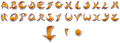 The font underwent changes before the final release.
 -
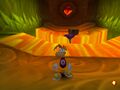 A look of an early version of Rayman 2, presumably the Sanctuary of Rock and Lava.
 -
 Another look of an early version of Rayman 2, presumably Whale Bay.
 -
 An unused scenario that was conceptionalised for gameplay, click for translation.


Gameplay

The gameplay in Rayman 2 is similar to that of the original Rayman, translated into a 3D world. Most of the gameplay consists of running, jumping, climbing, gliding and flying between platforms and other surfaces, interspersed with battle sequences with Robo-Pirates and other enemies. A new element of gameplay is swimming, which is present in some of the levels.
Contrary to the original game, this time Rayman starts with a few powers, such as helicoptering and a basic attack power, which is given to him by Globox who is introduced at the very beginning. Additional powers, some permanent and others temporary, are unlocked during the natural course of the game, similarly to the original Rayman.
The aim of the game is to defeat Admiral Razorbeard and his Robo-Pirates, and, by doing so, restore order to the world. Along the way, Rayman will locate and reassemble Yellow Lums that have been scattered following the explosion of the Primordial Core, and rescue creatures that have been imprisoned in cages. However, unlike in the original Rayman, Rayman 2 has no strict requirement to obtain all Yellow Lums/cages to finish the game, probably in order to make the game less difficult. A certain number of Yellow Lums is required to advance past specific points, but this number is typically substantially lower than the number of Yellow Lums available prior to that, and is easily obtainable during normal play. Some cages are also obligatory, as they contain creatures vital to completions of levels (typically, Teensies), and these cages are always in plain sight and impossible to miss.
Overall, far less backtracking and secret-hunting is required to complete the game, but the player is rewarded for breaking cages, as every 10 cages freed extend Rayman's life bar. Additionally, completing a level with all Yellow Lums and cages obtained gives access to a bonus level, where a baby Globox can help Rayman replenish his life bar or gain a Power Fist.
Replays
Once completed, a level can be replayed an unlimited number of times. Similarly to the original game, collectibles (Yellow Lums and cages) that have already been found do not reappear. Bosses, special characters and cutscenes are also usually skipped, making most levels much shorter, easier and emptier during replays. The baby Globox bonus levels are still offered on subsequent level completions, so Rayman can always restore his powers.
One difference from the original Rayman is that the final battle with Razorbeard in the Crow's Nest can be replayed.
Game records
Main article: List of Rayman records
Rayman 2 has two bonus levels that are present in all versions. The PlayStation version has significant differences made, and the peed is slightly different as well, and the PlayStation 2 version, Rayman Revolution, has the levels as part of unlockable minigames rather than bonuses, where the player has to collect all Red Lums.
Main characters
Protagonists
- Rayman – The hero and protagonist of the game.
- Globox – Rayman's best friend; husband of Uglette and father of the baby Globoxes.
- Ly the Fairy – Rayman's friend and powerful ally.
- Murfy – Serves as an ‘instructor’-type character.
- The Teensies – Keepers of the Hall of Doors.
- Clark the Giant – A friend of Rayman's.
- Ssssam – a snake who helps Rayman cross the Marshes of Awakening.
Antagonists
- Admiral Razorbeard – The main villain of the game.
- Robo-Pirate army – Razorbeard's army.
- Jano – The guardian of the Cave of Bad Dreams.
- Piranhas, spiders, Zombie Chickens – Twisted creatures that began to proliferate as a result of the Robo-Pirates' disruption of the natural balance.
- Caterpillars, Jumping eyes and Mini Jano – Nightmares of Polokus escaped from the Cave of Bad Dreams.
Environment

Unlike the original Rayman, Rayman 2 is not divided into certain themed worlds, but rather a trail of 20 different locations, none of which are as surreal as its predecessor's, but are still dissimilar to the real world. The levels are played in a linear fashion in a world map known as the Hall of Doors (the Isle of Doors in the Dreamcast version), with most levels following a single path (though the Cave of Bad Dreams, the Walk of Life, and the Walk of Power are on side-paths). The player is able to backtrack to past levels if he or she wishes, and can move on to the final stage without breaking all of the cages.
In the PlayStation 2 remake, the Hall of Doors is replaced by free-roaming hub areas in a place known as the Front. There are three of these areas, the Minisaurus Plain, Globox's House and Rainbow Creek, each of which has a Teensie Circle for quick access to completed levels.
Levels

Only the PC, Nintendo 64, and Dreamcast versions (including their derivatives like the DS/3DS and iOS ports) feature a consistent level set. The PlayStation version cuts down the number of levels and shortens existing ones, while the PlayStation 2 version expands existing levels and even adds new ones. This list does not include the Game Boy Color version, which is a completely separate game.
- The Woods of Light (renamed “The Clearing” in the PlayStation version)
- The Fairy Glade
- The Marshes of Awakening
- The Bayou
- The Walk of Life (sublevel, renamed “Racing Challenge #1” in the PlayStation 2 version)
- The Sanctuary of Water and Ice (omitted in the PlayStation version, although some parts were merged with Whale Bay)
- The Menhir Hills
- The Cave of Bad Dreams (sublevel, not replayable in the PlayStation 2 version)
- The Canopy
- Whale Bay
- The Sanctuary of Stone and Fire
- The Echoing Caves (in the PlayStation 2 version, some stages are swapped with the Precipice and the Top of the World)
- The Precipice (in the PlayStation 2 version, some stages are swapped with the Echoing Caves)
- The Top of the World (omitted from the PlayStation and PlayStation 2 versions, the chair segment is used as a minigame in the PlayStation 2 version and the second part as a part of the Echoing Caves)
- The Sanctuary of Rock and Lava (renamed “Beneath the Lava Sanctuary” in the PlayStation 2 version)
- The Walk of Power (sublevel, renamed “Racing Challenge #2” in the PlayStation 2 version)
- Beneath the Sanctuary of Rock and Lava (renamed “The Lava Sanctuary” in the PlayStation 2 version)
- Tomb of the Ancients
- The Iron Mountains (renamed “The Gloomy Island” in the PlayStation version. Final segment featured as a separate level in the PlayStation 2 version)
- The Prison Ship
- The Crow's Nest
- A level from the cancelled 2D prototype (PlayStation version only)
Version differences
Since its original release in 1999, Rayman 2 has received a bunch of ports to other platforms, with each new port having some noticeable differences.
Nintendo 64

The Nintendo 64 version, along with the PC version, is the original version of the game. The Nintendo 64 version features a different soundtrack in MIDI format, which was later reused in the Nintendo DS port. Several of the menu transitions are exclusive to this version.
Windows PC
The PC version retains the same level structure from the Nintendo 64 version with higher resolution graphics and a higher framerate.
This version was later re-released on GOG[10] and Uplay.[11]
Sega Dreamcast

The Sega Dreamcast version retains the high quality textures from the PC version, while slightly improving some. A new area has been added in the Woods of Light called Globox Village, where the player can access new minigames by collecting Globox Crystals. This is the first version of Rayman 2 to allow for widescreen and the only version where the aspect ratio can manually be changed. The Hall of Doors has been replaced by the Isle of Doors. Several more Robo-Pirates have been added as well as a new type that shoots bombs. This is also the first version to have the cutscene in the Prison Ship where Rayman frees the prisoners, which was cut from the original versions due to time constraints.
Sony PlayStation

Main article: Rayman 2 (PlayStation)
The Sony PlayStation version removes and changes a bunch of levels, while merging others, and reduces the total amount of Yellow Lums from 1000 to 800. Some levels do, however, have several new areas and some cutscenes have been changed as well. This is the first version to have full voice acting. Many graphical changes are present, most notably in the Hall of Doors. A new bonus level can be unlocked that lets the player try a stage from the 2D prototype. Instead of Lums being imprisoned in cages, there are now Ludivs, Greenbottles and Minisaurus.
This version was later re-released on the PlayStation Store for PlayStation Portable, PlayStation 3 and PlayStation Vita.
Sony PlayStation 2 (titled Rayman Revolution)

Main article: Rayman Revolution
The Sony PlayStation 2 version, titled Rayman Revolution in Europe and Rayman 2 Revolution in North America, is the port with the most added content. New hub worlds have been added, replacing the Hall of Doors, levels have been expanded, most notably the Fairy Glade and the Echoing Caves, new cutscenes and dialogue are present, and new bosses have been added, including a fourth guardian. New music has been added in the new areas and for Robo-Pirate battles, and new upgrades and minigames can be obtained by collecting Yellow Lums and by freeing Familiar Spirits from cages. A lot of graphical improvements are present with a bunch of previously 2D assets having been reworked into 3D models. This is also the second version to feature full voice-acting. The original Raymanian voices can, however, still be chosen, with new sounds added.
This version was later re-released on the PlayStation Store in North America for PlayStation 3.
Nintendo DS (titled Rayman DS)

Main article: Rayman DS
The Nintendo DS version, titled Rayman DS, is a direct port of the Nintendo 64 version. The second screen can be used to control Rayman with a virtual analog stick and shows the game HUD while playing. This version has a bunch of bugs not present in the Nintendo 64 version.
Apple iOS

Main article: Rayman 2 (iOS)
The Apple iOS version is a direct port of the Dreamcast version, with the minigames as well as Globox Village being omitted. The Lift mini-game was, however, present in the free demo. This version has since been removed from the App Store and can no longer be obtained legally if it was not purchased before being removed.
Nintendo 3DS (titled Rayman 3D)

Main article: Rayman 3D
The Nintendo 3DS version, titled Rayman 3D, is a direct port of the Dreamcast version, with, similarly to the Apple iOS version, the minigames as well as Globox Village removed. Several graphical and sound glitches are present as well as a game breaking bug preventing the player from obtaining the 1000th Yellow Lum as intended. A balanced difficulty curve has been added, having several obstacles being removed if the player misses too many Yellow Lums.
This version is downloadable from the Nintendo eShop in North America.
Manuals
Panic in the Chamber of the Teensies and the Fairy Council: Robo-Pirates from deep in space have arrived, determined to conquer and enslave their entire world. The time for combat has come. Volunteers form small resistance groups and throw themselves into battle with the evil aggressors. Rayman and his friend Globox go to the edge of the Great Forest, where the highest number of pirates are located.Rayman jumps from a tree and activates his helicopter for a soft landing in the middle of a thicket of bushes. "The Pirates are coming straight at us!", cries Rayman to his friend. "Get ready!"
The earth suddenly begins to tremble...Several trees collapse, creating a passageway for an army of robots. The Battle begins! Rayman leaps into action, sending metal monsters flying with his powerful energy spheres. A little later, Globox, trembling with fright, desperately tries to make the robots rust up by creating little rain storms over their heads. A robot, creaking horribly, crashes to the ground. "Not bad, Globox!" shouts Rayman with a smile. Globox tries to answer, but Rayman doesn't hear. The strained face of Ly has just appeared in his mind. "Rayman...", begins Ly, in a weary voice., "The pirates have broken the Heart of the World. The energy has scattered. Other than Clark, all of our brave warriors have been captured..."
Shocked by this terrible news, Rayman is surprised by a gigantic robot who pins him between its powerful pinchers. He tries to create a new energy sphere in the palm of his hand, but to no avail. The destruction of the Primordial Core has taken away all of his powers... Desparate, he shouts to his friend... "They've got me, Globox! Save Yourself!" "But...but...what about you?!" "No time to explain! Go find Ly, she'll tell you what to do!" After a moment of hesitation, Globox dodges between the feet of the robots, and plunges into the high grass.
An evil laugh reverberates. Rayman turns and sees Razorbeard, the leader of the Pirates. "I have you, Rayman! You'll soon be my most obedient slave!..."
Rayman tries to free himself, but the iron grip of the robot tightens around him. He casts a dark look at Razorbeard and shouts defiantly : " It's not over yet, pirate! I'll find a way to escape and then I'll make you wish you'd never been born!"
—Manual, Rayman 2
Click on the thumbnails to read the manuals.
-

The English PC manual packaged with the GoG.com and Uplay version -
The English PC manual packaged with the Steam version -
The French PC manual -

The Swedish/Finnish PC manual -
The Spanish PC manual -
The Italian PC manual -
The German PC manual -
The Dutch PC manual -

The Danish/Norwegian PC manual -

The Portuguese PC manual -
The Polish PC manual -
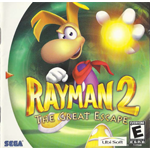
The English Dreamcast manual -
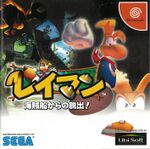
The Japanese Dreamcast manual
Promotion
Ubisoft promoted Rayman 2 with many toys and even a cartoon. There were YoYos, cell phone covers, a PlayStation 2 remote, a version of the game with a figure, and Happy Meal toys.
Cartoon
Main article: Rayman: The Animated Series
In 1999, an animated television show based on the Rayman series was produced to accompany the release of Rayman 2. Only 4 episodes of the first season were released before being cancelled.
McDonald's
Main article: Rayman merchandising
Between the 17th of May and 13 June 2000, Ubisoft joined with McDonald's to make a Happy Meal with Rayman toys. These toys were a Rayman riding a walking shell, Rayman on a plum with spinning helicopter hair, a light-up cage, a sound-making Henchman 800, a wobbling Globox and Ly the Fairy. The toys were only available in France.

Tonic Trouble
Characters from each game made cameo appearances in the other game. In Tonic Trouble, Rayman can be seen during the game's end credits. In Rayman 2, a salesman who previously appeared in the intro sequence of the PC version of Tonic Trouble sells the Grolgoth to Razorbeard late in the game. Tonic Trouble was worked on (though not designed) by Michel Ancel, used the Rayman 2 engine, originally appeared on the same platforms as Rayman 2, and was also released by Ubisoft, giving reason for the crossovers, though Tonic Trouble had not fared well critically or commercially, whereas Rayman 2 became successful in both areas.
Royal V
The musical group Royal V released a single to promote Rayman 2, under the name of "It's Good To Be The King". The official videoclip[12] features unique footage of scrapped areas of the game.
Mobile spin-offs
Rayman Bowling, Rayman Golf and Rayman Garden are mobile phone spin-offs of Rayman 2 and its remakes developed by Gameloft.
Reception
Rayman 2: The Great Escape was released to critical acclaim. On Metacritic, the N64 version of the game received a score of 90%, signifying universal acclaim.[13] On GameRankings, the Dreamcast, Windows, N64 and PlayStation versions of the game were assigned scores of 92.71%, 91.27%, 88.83% and 87.23% respectively.[14]
The game has been included on several lists of the greatest games of all time. IGN rated it as the 67th-greatest game.
Platform gaming has long been known for jumping, bopping enemies, and collecting items. Rayman 2 broke no new grounds in these areas, but instead perfected them as no other game had before. Starring a character with no arms, legs or neck, Rayman 2 is a demonstration of what the modern platform game could be – smart, fast and challenging.—IGN staff, IGN[15]
GameSpot staff member Ryan Davis wrote an article on the game for the site's 'Greatest Games of All Time' series.
The gameplay was great, but, truly, it was the presentation of Rayman 2 that brought the whole package together. This was a game created by artists, not technicians, and its use of crisp, clear, beautifully crafted textures over relatively simple 3D objects is a testament to that. This isn't to say that Rayman 2 wasn't technically impressive at the time, because its massive 3D environments proved it certainly was that, but the creators of Rayman 2 wanted to awe you with the surreal, vivid world they had created, instead of showing you some nifty technical tricks. The lush, slightly off-kilter musical score certainly helped perpetuate this dreamy reality, as did the nonsense languages that the inhabitants of The Great Escape spoke.Rayman 2: The Great Escape is more than the sum of its parts, though its parts are admittedly a bit impressive on their own. Its European roots show through – as do Rayman creator/designer Michel Ancel's interests in Nordic and Celtic mysticism – and lend the affair a flavour that has not been replicated since. Simply put, you will not have another video game experience quite like Rayman 2: The Great Escape, which is why we chose it as one of the greatest games of all time.
For my money, 3D platforming reached its absolute apex in Rayman 2: The Great Escape. I played through The Great Escape on the PC. Then I played through Rayman 2: Revolution on the PlayStation 2. And each time my experience with Rayman 2 had been simply sublime. It's an amazingly well-crafted platformer, providing a variety of play that most modern platformers can't match. But what stays with me the most, over time, is the beautiful, surreal world that Rayman 2 takes place in. I've not had a 3D platforming experience that good, before or since.
—Ryan Gage, GameSpot[16]
Gallery
Artworks
-
-

-

-
-
-
-
-
-
-

-
-

-

-
-
-
-

-

-
-

-

-
-
-
-
-

-

-

-
-
-

-

-

-
-
-

-
-
-
-

-

-
-
-
-
-

-
-

-
-

-
-
-

-
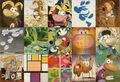
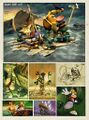 A collage of Rayman 2 artwork and screenshots used as a reference for the artistic design of Rayman Origins.
 -
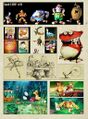 Another representative Rayman 2 collage used as a reference for Rayman Origins.


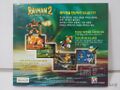
Covers
-

-

-

-

-
-
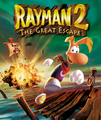 The version of the cover used inside the Ubisoft Connect game launcher
 -
 The PC cover with the sides, top, and bottom uncropped
 -

-
-


.jpg)
.jpg)
.jpg)
Promo art


.jpg)
.png)
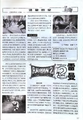
Magazine scans
-

-
 Upcoming games for the Christmas season in PC Power Zine (January 2000)
 -
-
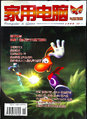 Front cover of 家用电脑与游戏 featuring Rayman 2
 -
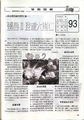
 Competition hosted by the Chinese gaming magazine publication
 -
-

.jpg)
.jpg)
.png)
.png)
.png)
.png)
.png)
Trivia
- In the German gaming magazine PC Player (issue 01/2000), Rayman 2: The Great Escape was named as "Best Platformer in 1999".
- The Sony PlayStation European release of Rayman 2 originally came with a digital watch. In the North American release it originally came with a beach ball.
- In the Japanese localisation of the game, several of the game's color palette was changed. Rayman's body was made blue, Ssssam the Watersnake was recolored spring green, Jano's hat was turned red, and Ly's body was changed from yellow/purple to white/pink.
- The names of a few characters changed during design of the game: the original name of Globox was Globber, the original name of Razorbeard was Razorface, the original name of Polokus was Pollochus the Magician, the Teensies were originally named the Smalbeings, and the Robo-Pirates (called Red Rum before) were originally employed by a ‘mysterious guild’, which had decided to create an intergalactic zoo or circus featuring creatures from Rayman's world;[17] remnants of this storyline can be found in Rayman: The Animated Series, and are also present one some of the early box art for the game.
- Tim Schafer revealed that Rayman 2 was a huge influence on his game Psychonauts.[18]
References
- In the Dreamcast version of Rayman 2, Brainox says "I've seen you somewhere before. Weren't you in Rayman 1?", which references the first Rayman game.
- In the Playstation 1 version of Rayman 2, the Antitoons appear, which references the first Rayman game.
- The mosquito appears in all versions of Rayman 2, which references the first Rayman game.
- The plume appears in all versions of Rayman 2, which references the first Rayman game.
- Jano's name may have been derived from that of Janus, the two-faced Roman god of gates. This may be an allusion to Jano's two-faced nature: sometimes he helps Rayman; other times he tries to kill him.
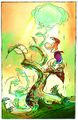
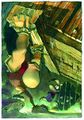
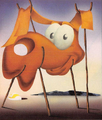
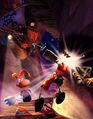
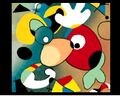
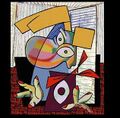
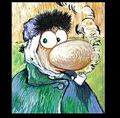
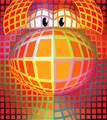
- In promotional artwork for Rayman 2, there are references to the paintings The Raft of the Medusa by Théodore Géricault, Self-portrait with Bandaged Ear by Vincent van Gogh, Vertumnus by Giuseppe Arcimboldo, The Birth of Venus by Sandro Botticelli, The Persistence of Memory by Salvador Dali, M-Maybe by Roy Lichtenstein, The Kiss by Gustav Klimt, Guernica by Pablo Picasso, Composition with Red, Blue and Yellow by Piet Mondrian, L'Oiseau de Ciel (The Sky Bird) by René Magritte, Vega Kontosh by Victor Vasarely, Blue Star by Joan Miró and The Smile of the Flamboyant Wings by Joan Miró.
External links
- Rayman 2: The Great Escape playthrough at YouTube (PC version)
- Rayman 2: The Great Escape playthrough at YouTube (Sega Dreamcast version)
- Rayman 2: The Great Escape playthrough at YouTube (Sony PlayStation version)
- Rayman2.com archive
- Rayman2dc.com archive
- Rayman2.ubi.com archive, loud music
- "Rayman 2" page of ubisoft.com archive
See also
- Miscellanea
- List of quotes in Rayman 2
- Rayman 2 Forever
- Rayman Revolution
- Rayman 2: The Great Escape : Le Guide Officiel
- Rayman 2: The Great Escape: Prima's Official Strategy Guide
- Technical information
References
- ↑ PC Power Zine issue 52 (November 1999), File:PC Power Zine Issue 52 (November 1999).jpg
- ↑ PC Power Zine issue 54 (January 2000), File:PC Power Zine Issue 54 (January 2000).jpg
- ↑ 家用电脑与游戏机 #63 (November 1999), https://archive.org/details/jiayou-magazine/1999/%E5%AE%B6%E7%94%A8%E7%94%B5%E8%84%91%E4%B8%8E%E6%B8%B8%E6%88%8F%E6%9C%BA%20Vol.063%201999.11
- ↑ Dreamcast Magazine (Japan) issue 63 (March 2000)
- ↑ Australian Station issue 16, page 58, https://archive.org/details/australian-station-16-october-2000/page/58/mode/1up
- ↑ Unseen64.com, Rayman 2 [2D version - Unreleased], http://www.unseen64.net/2008/04/11/rayman2-2d-cancelled
- ↑ YouTube.com, Interview https://www.youtube.com/watch?v=hn_UYduONuA
- ↑ YouTube.com, Unused area https://www.youtube.com/watch?v=rCZ10RrA_5Q
- ↑ YouTube.com, Early trailer https://www.youtube.com/watch?v=6KujjiLYaW8
- ↑ Rayman 2 on GOG https://www.gog.com/game/rayman_2_the_great_escape
- ↑ Rayman 2 on Uplay http://store.ubi.com/eu/rayman-2--the-great-escape/57062ec088a7e316728b465a.html
- ↑ Internet Archive, Royal. V - It's Good To Be The King (1999), https://archive.org/details/royal.-v-its-good-to-be-the-king-1999
- ↑ Metacritic.com, Rayman 2: The Great Escape for Nintendo 64 Reviews, Ratings, Credits, and More at Metacritic, http://www.metacritic.com/game/nintendo-64/rayman-2-the-great-escape
- ↑ GameRankings.com, Reviews and News Articles, http://www.gamerankings.com/browse.html?search=rayman&numrev=3&site=
- ↑ IGN.com IGN's Top 100 Games, http://ie.top100.ign.com/2005/061-070.html
- ↑ GameSpot.com, The Greatest Games of All Time, http://uk.gamespot.com/gamespot/features/all/greatestgames/p-24.html
- ↑ IGN, An Interview with Ubi Soft, https://www.ign.com/articles/1998/05/28/an-interview-with-ubi-soft
- ↑ DoubleFineProd, Psychonauts Retrospective // The Color of the Sky in Your World Part 2, https://youtu.be/9WWSsw-16vw?t=1m25s